
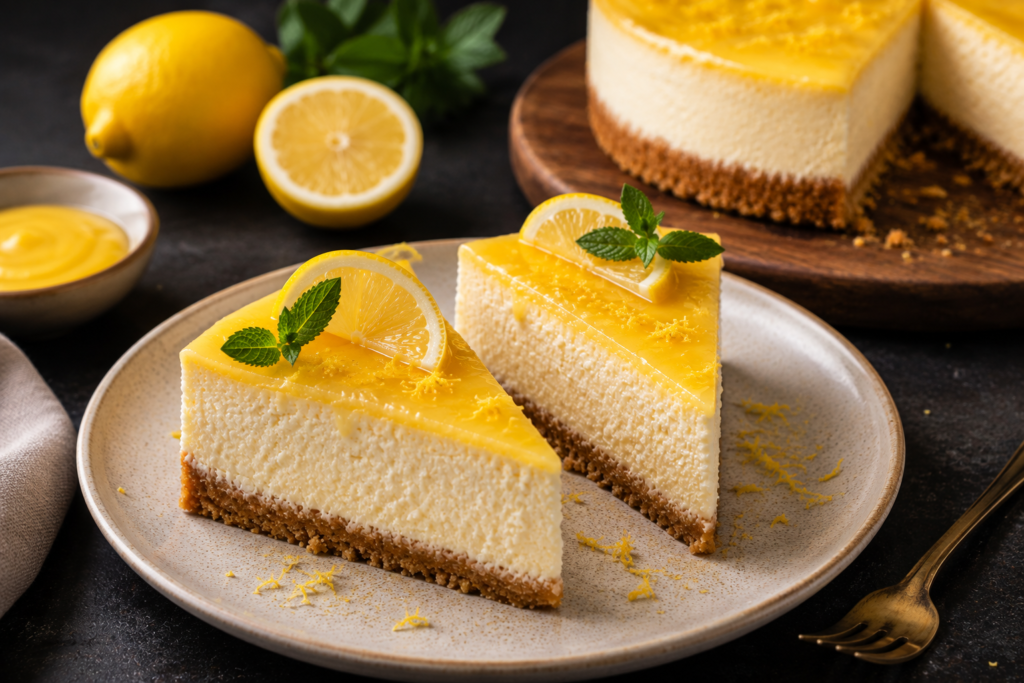
Lemon cheesecake earns its reputation as one of the most requested cheesecake flavours for a simple reason — it solves cheesecake’s one real weakness. Cream cheese filling, on its own, can feel heavy after a few bites. Lemon cuts straight through that richness with brightness and acidity, which is why it’s stayed a bakery staple in Toronto and beyond for decades, long before more novelty flavours came along.
As a pastry chef, most of what people ask me about this dessert comes down to getting the classic right — what actually goes into a proper lemon filling, what crust pairs best, and what lemon juice is doing beyond just flavour. This guide covers all of it, then gives you a full old-fashioned-style recipe.
Key Takeaways
- Lemon cheesecake works because acidity balances cream cheese’s richness — the same principle behind most fruit cheesecakes, but lemon does it more directly than sweeter fruits.
- A true lemon filling usually means both zest and juice worked into the batter, paired with ingredients like lemon yogurt for a bright citrus hit.
- Lemon juice isn’t just flavour — its acidity interacts with the dairy and affects how the filling sets, which is why recipes are specific about the amount.
- A classic graham crust remains the most common pairing, whether pre-made or homemade for an old-fashioned style.
- Full recipe and an FAQ built from real reader questions are below.
What Actually Goes Into a Lemon Cheesecake Filling?
A proper lemon filling relies on both zest and juice, not just one or the other. Zest carries most of the aromatic lemon oils and gives you that bright citrus scent without adding liquid or acidity to the batter, while juice contributes the tartness and a small amount of acid that affects texture. Many bakers also incorporate components like lemon yogurt for extra moisture and a smooth, tangy lift on top of the milder flavour baked into the filling itself.
As for what to put on top, whipped topping and fresh lemon slices are the classic choices if you want something light and refreshing.
What Makes Lemon Cheesecake So Good?
The appeal comes down to contrast. Cream cheese filling is dense and rich on its own; lemon’s sharpness keeps each bite from feeling one-note, which is a big part of why it’s consistently one of the most requested cheesecake flavours at bakeries. It also pairs naturally with other bright, complementary flavours — blueberry and raspberry are the most common fruit pairings, since their tartness echoes lemon’s without clashing, and a light vanilla element rounds it out without competing.
The common mistakes here aren’t unique to lemon cheesecake — they’re the same issues that affect cheesecake generally: overmixing the batter after the eggs go in, which causes cracks, and overbaking, which leaves the centre dry instead of just barely set. Lemon cheesecake doesn’t forgive those mistakes any more than a plain version does.
Does Lemon Juice Actually Matter, or Is It Just Flavour?
It matters beyond flavour. Lemon juice is acidic, and that acidity interacts with the dairy in the filling — in small, controlled amounts, it doesn’t cause any issue, but recipes are specific about quantity because too much acid can affect how the batter sets, sometimes leading to a slightly looser or more delicate texture than a filling without any added acid. Skip the lemon juice entirely and you lose more than flavour — you lose the tartness that balances the richness, leaving a filling that tastes closer to a plain cheesecake with lemon zest sprinkled in rather than a true lemon cheesecake.
This is also why old-fashioned lemon cheesecake recipes tend to be precise about ratios rather than “add lemon to taste” — the juice is doing double duty as both a flavour component and a structural one.
What’s the Traditional “Philadelphia” or Old-Fashioned Version?
As with the other Philadelphia-branded recipes people search for, “Philadelphia lemon cheesecake” generally just refers to a classic recipe built around reliable ingredients rather than a fundamentally different technique. The “old-fashioned” framing usually points to a simpler style than modern layered or swirled versions — a single baked filling with lemon worked directly into the batter, a basic graham crust, and little to no elaborate topping beyond a light whipped topping. It’s the version built on fewer components, letting the lemon and cream cheese speak for themselves rather than competing with additional flavours or textures.
The Recipe: Classic Baked Lemon Cheesecake
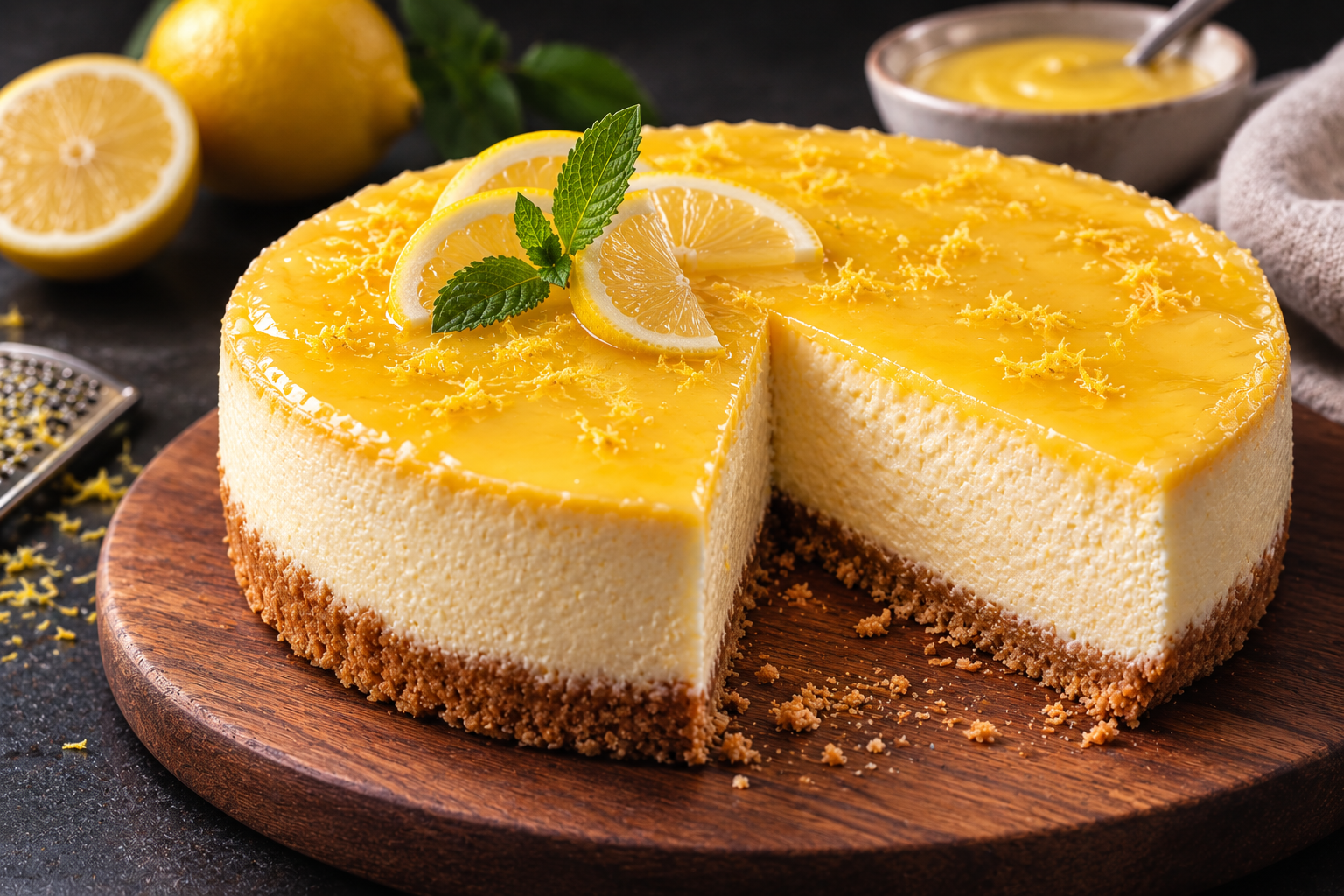
Lemon Cheesecake
Ingredients
Method
- Preheat oven to 350°F (175°C).
- In a large mixing bowl, beat cream cheese and sugar until smooth. Gradually add in flour, lemon juice, lemon zest, and eggs, one at a time until just combined. Stir in yogurt. Pour into crust. Place into a baking pan filled with 1 inch of water.
- Bake 50 to 60 minutes, until set. Cover, cool, and chill overnight.
- Garnish suggestion: whipped topping and fresh lemon slices.
Frequently Asked Questions
- What can you put on a lemon cheesecake? Whipped topping and fresh lemon slices are classic choices, though powdered sugar or fresh berries like blueberries or raspberries all work well too.
- How do you make lemon filling? Combine lemon zest, juice, flour, eggs, and lemon yogurt into a cream cheese base for a smooth, bright lemon filling.
- What crust goes best with lemon cheesecake? A classic graham cracker pie crust is the most common and reliable pairing.
- What is the secret to a good cheesecake? Room-temperature ingredients, minimal mixing once the eggs are added, and a gradual cooldown after baking.
- What fruit goes best with lemon cheesecake? Blueberries and raspberries are the most common pairings — their tartness complements lemon’s acidity rather than competing with it.
- What is the original recipe for cheesecake? It generally refers to a classic cheesecake built specifically around standard cream cheese and simple baking techniques rather than a distinct style.
- What happens if you don’t put lemon juice in cheesecake? You lose the tartness that balances the richness of the cream cheese, and you also lose the small structural effect the acidity has on how the filling sets — the result tastes closer to plain cheesecake with a hint of zest than true lemon cheesecake.
Final Thoughts
Lemon cheesecake has stayed a classic for a reason — the acidity does real work balancing the richness, not just adding flavour on top. Whether you keep it simple with lemon and yogurt worked into the batter, the fundamentals are the same ones that make any cheesecake succeed: proper mixing, a water bath, and patience while it chills.
Give it a try this week, and if your filling cracks or doesn’t set, leave a comment — I’ll help you troubleshoot exactly where it went off track.