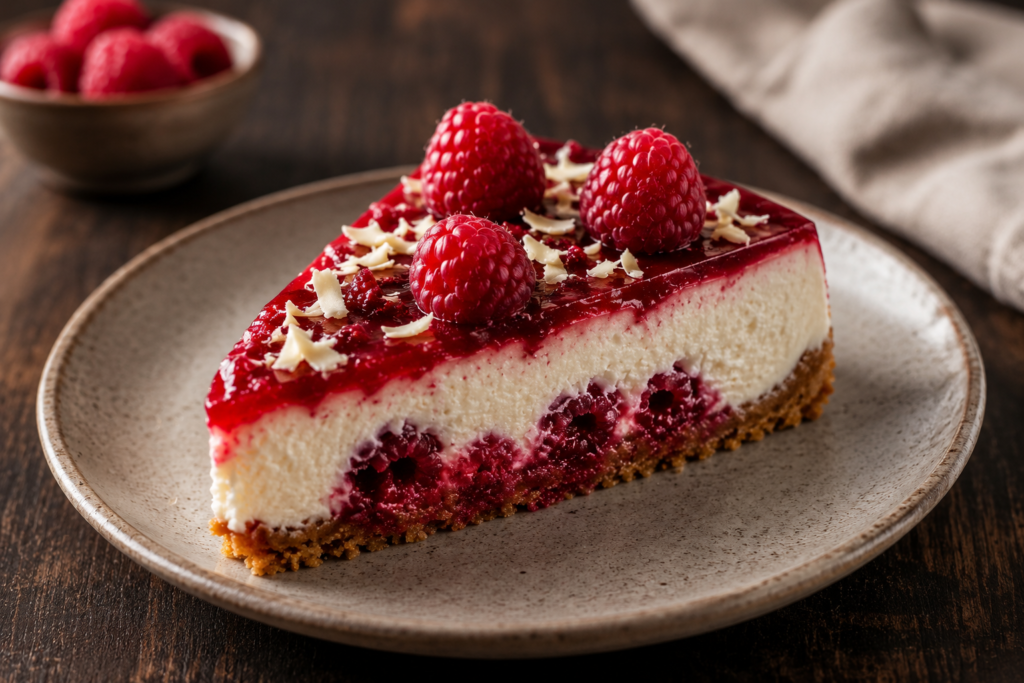
Raspberry Cheesecake: A Pastry Chef’s Guide to Using Fresh Berries the Right Way

Raspberry Cheesecake

Raspberry cheesecake is deceptively simple to get wrong. The flavour pairing itself is never the issue — raspberry’s sharp tartness against rich cream cheese is one of the most reliable combinations in baking. The real question people run into is technical: what happens when you put juicy fresh raspberries directly into a cheesecake batter, and whether that’s even a good idea in the first place.

As a pastry chef, that’s genuinely the most common question I get about this dessert — followed closely by whether it’s possible to make a stripped-down, minimal-ingredient version without losing what makes raspberry cheesecake worth making. This guide answers both, then walks you through a full recipe.

Key Takeaways

  • Raspberries are excellent on cheesecake, but fresh whole berries mixed directly into the batter can release excess moisture and throw off the texture.
  • The safer techniques are swirling a reduced raspberry sauce through the filling, or adding fresh berries as a topping rather than baking them inside.
  • A genuinely minimal-ingredient raspberry cheesecake is achievable, but it means going no-bake rather than trying to strip down a baked version.
  • The most common cheesecake mistakes here are the same ones that affect any cheesecake — overmixing, overbaking, and rushing the chill time.
  • Full recipe and an FAQ built from real reader questions are below.

Can You Put Fresh Raspberries in a Cheesecake?

Yes, but how you add them matters more than whether you use them at all. Raspberries are mostly water, and dropping whole fresh berries directly into a wet cheesecake batter can release liquid as it bakes, leading to a filling that’s uneven, streaky, or slightly loose in spots rather than a clean, uniform texture. This is a common trap for home bakers who assume “fresh is always better” without accounting for how much moisture the fruit is carrying.

The more reliable approach is to cook the raspberries down into a thick sauce first — simmering with a bit of sugar until it reduces — then swirl that concentrated sauce through the batter rather than the whole berries. This gives you the same raspberry flavour and colour without the raw moisture working against your filling. If you want the visual and textural appeal of whole berries, adding them as a topping after baking, rather than mixing them in, sidesteps the moisture problem entirely.

Are Raspberries Actually Good on Cheesecake?

Unquestionably yes — raspberry is one of the most dependable cheesecake pairings, not just a trendy topping choice. Its tartness cuts through cream cheese’s richness the same way lemon does, but with more sweetness and less sharpness, which makes it an easier flavour to like broadly. That’s part of why it consistently shows up as a favourite pairing rather than a niche one.

As for how it compares to other desserts in terms of being “fattening” or unhealthy — that’s a hard thing to rank meaningfully. Rich baked desserts in general carry similar calorie density per slice, and raspberry cheesecake isn’t an outlier in either direction; the fruit itself is relatively low in sugar compared to many other toppings, so if anything it’s a lighter choice than a caramel or chocolate-heavy version. Whether it counts as “disliked” really comes down to personal taste rather than any broad consensus — tart fruit desserts tend to be more polarizing than plain vanilla or chocolate ones, but that’s true of fruit desserts generally, not raspberry cheesecake specifically.

What’s the Best Recipe — And Can You Really Simplify It?

There isn’t one single “best” recipe so much as a best recipe for what you’re going for. A classic version with a ginger biscuit and cream cheese base gives you a smooth texture using gelatin to set. If you’re after a genuinely minimal-ingredient version — the 2, 3, or 4-ingredient versions people search for — that almost always means going no-bake rather than trying to strip a baked recipe down too far. A basic no-bake version comes down to cream cheese, raspberry purée or jam, and whipped cream, with a pre-made crust as an optional fourth component.

The tips that come up most for raspberry cheesecake specifically are about handling the fruit correctly — reduce or drain excess liquid before adding it, and don’t fold fresh berries in at the last second expecting them to stay intact through mixing. Beyond that, the general cheesecake mistakes apply here the same as anywhere else: overmixing causes lumps, and rushing the chill time leaves the filling too soft to slice cleanly.

The Recipe: No-Bake Raspberry & Ginger Biscuit Cheesecake
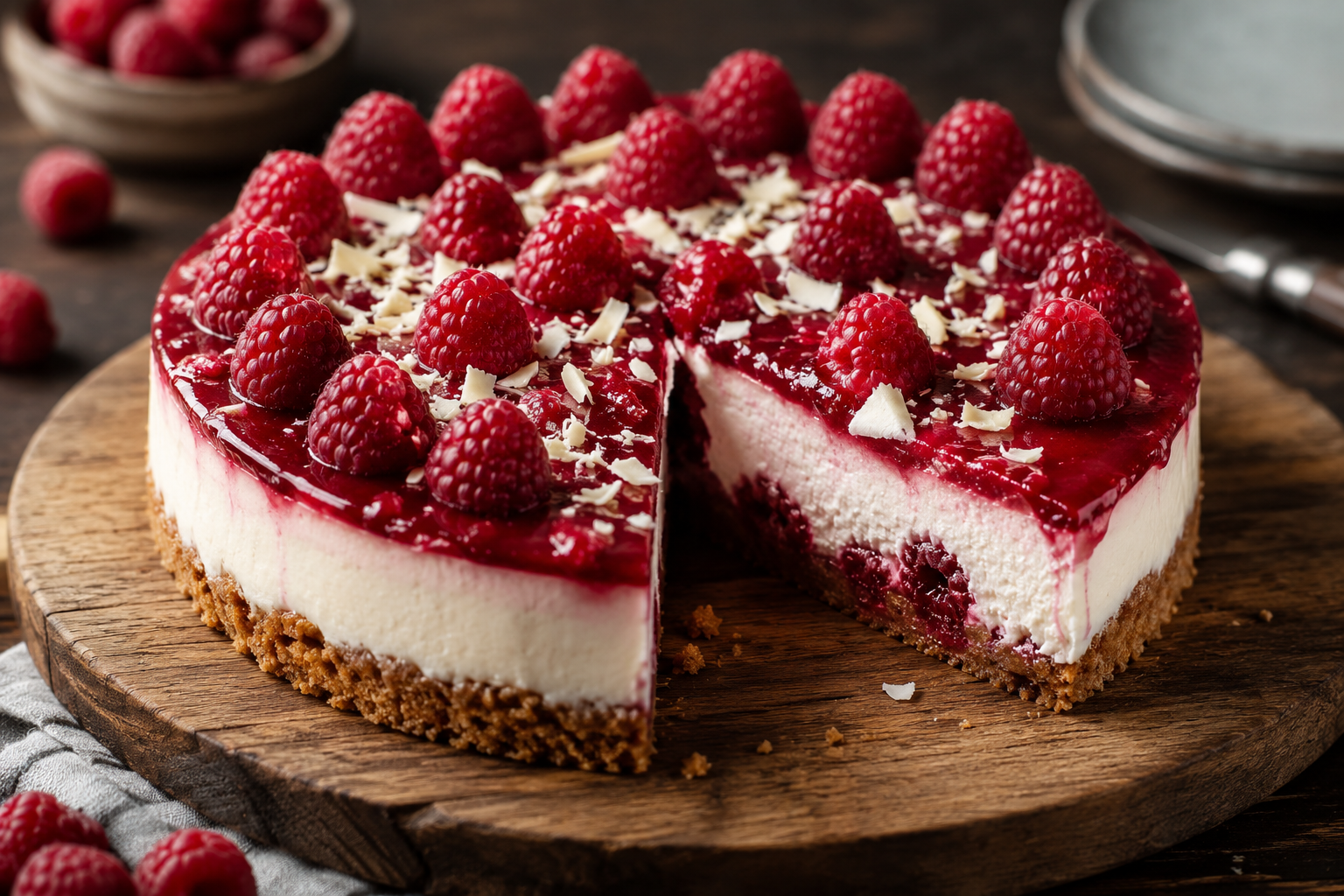
Raspberry Cheesecake

Raspberry Cheesecake

Flavor & Style: A delicious no-bake raspberry and ginger biscuit cheesecake featuring a smooth cream cheese filling set with gelatin and topped with fresh raspberries and warmed jam.
Yield & Timing: Yields 5 servings, with a prep time of 10 minutes, a cooking/dissolving time of 45 minutes, plus chilling time in the refrigerator until set.
Prep Time 10 minutes
Cook Time 25 minutes
Total Time 55 minutes
Servings: 5 Servings
Course: Dessert

Ingredients
  

  • 250 g 2.1/2 biscuit crumbs ginger biscuits
  • 125 g 1/2 cup butter, melted
  • 2 tsp. 10ml finely grated lemon zest
  • 80 g 1/4 cup raspberry jam, warmed
  • 250 g Raspberries
  • 2 tsp. 10ml gelatin
  • 250 g cream cheese at room temperature
  • 125 g 1/2 cup sugar
  • 1 Tbsp. lemon juice
  • 300 ml thickened/heavy cream

Method
 

  1. Grease and line a 23cm springform baking pan/tin with non-stick baking paper. Crush the biscuits until they look like fine breadcrumbs, add the butter and lemon zest, mix thoroughly and then press into the bottom and sides (if you like the biscuit base on the sides) of the baking pan/tin. Place in the freezer for about 30 mins.
  2. Add 2 Tbsp. water in a heatproof bowl over a pan of simmering water, add the gelatin and stir until completely dissolved (or just follow the instructions on the packet).
  3. While the gelatin is cooling, beat the cream cheese, sugar and lemon juice in a mixing bowl or if using a food processor, pulse until smooth, scraping down the sides of the bowl every few minutes so that you don’t have any lumps at the end and beating again until smooth.
  4. Pour into prepared tin, refrigerate until set, and then decorate by sprinkling the raspberries over the top, and brush with the warmed jam.

    Frequently Asked Questions

    • What is the 3-ingredient cheesecake? A no-bake version using cream cheese, raspberry purée or jam, and whipped cream, set in the fridge without eggs or baking.
    • Can you put fresh raspberries in a cheesecake? Yes, but whole fresh berries mixed directly into the batter can release excess moisture — a reduced raspberry sauce swirled in, or fresh berries added as a topping, are more reliable techniques.
    • What are common cheesecake mistakes to avoid? Overmixing, and not chilling long enough before slicing.
    • What is the secret to a good cheesecake? Room-temperature ingredients and minimal mixing once the ingredients are combined — most texture problems trace back to one of those two things.
    • Are raspberries good on cheesecake? Yes — raspberry’s tartness balances cream cheese’s richness in much the same way lemon does, with a bit more natural sweetness.
    • What is the hardest cheesecake to make? There’s no single hardest recipe; cheesecake in general can be technically demanding because it’s sensitive to overmixing and rapid cooling.

    Final Thoughts

    Raspberry cheesecake rewards a bit of technique with the fruit itself — reduce it, swirl it, or save it for the topping, rather than folding whole berries straight into the batter. Get that right, along with the same fundamentals that apply to any cheesecake, and you end up with a slice that looks as good as it tastes.

    Give the recipe a try this week, and if your swirl disappears or your filling comes out watery, leave a comment — I’ll help you figure out exactly where the moisture got away from you.
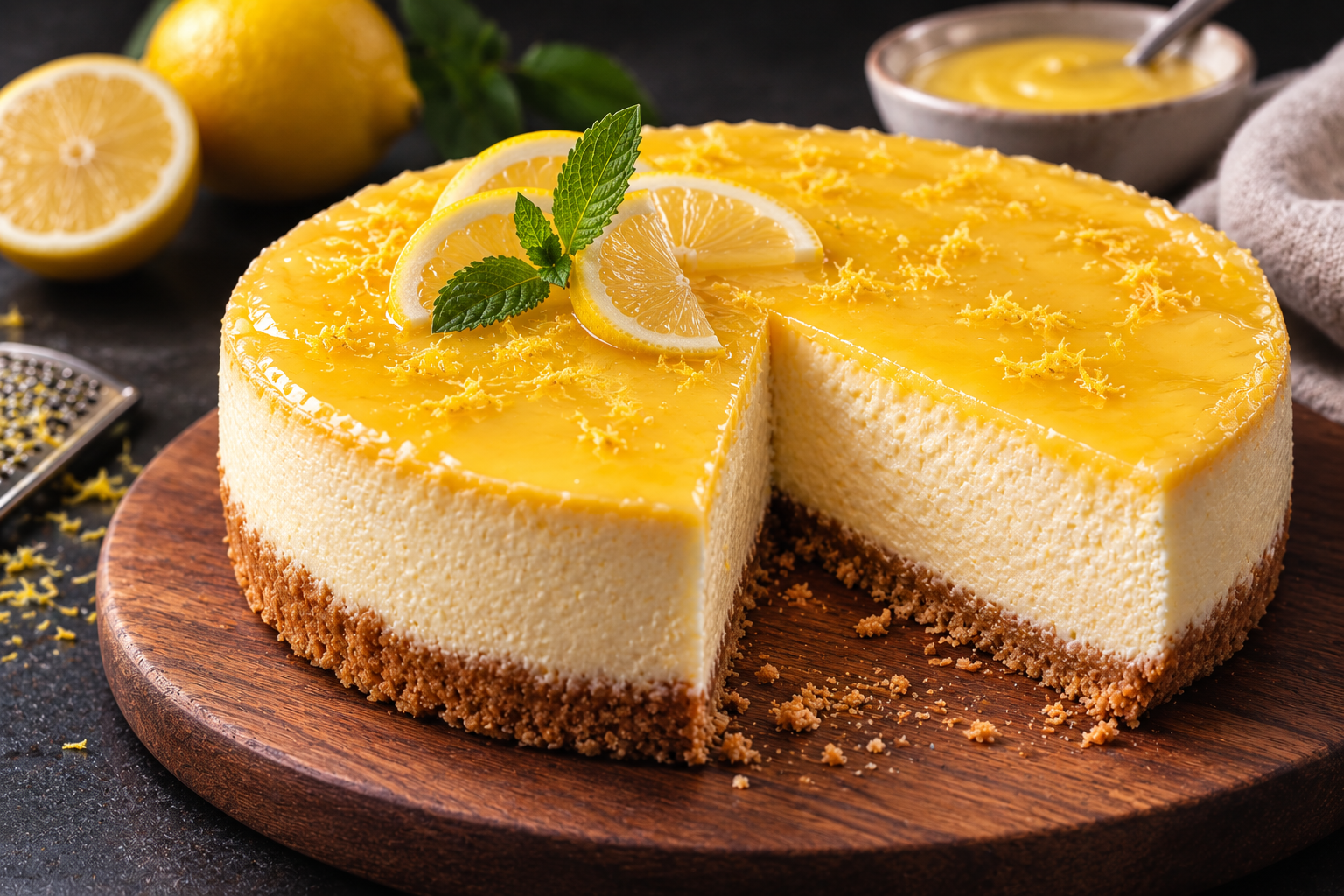
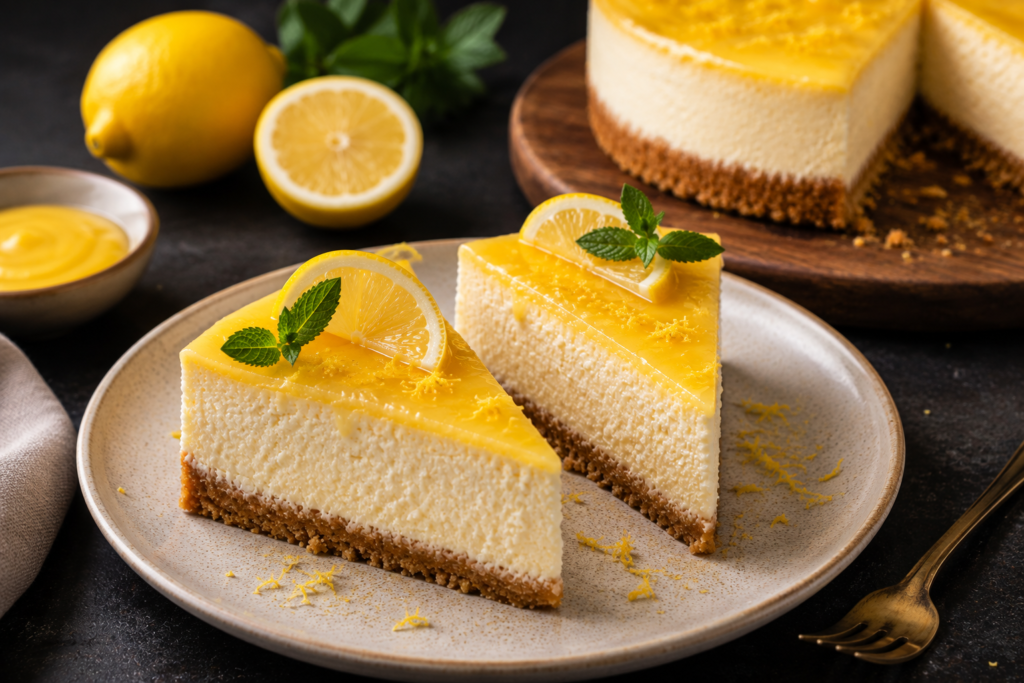
    Lemon Cheesecake: A Pastry Chef’s Guide to the Classic Done Right

    Lemon Cheesecake
    Lemon cheesecake

    Lemon cheesecake earns its reputation as one of the most requested cheesecake flavours for a simple reason — it solves cheesecake’s one real weakness. Cream cheese filling, on its own, can feel heavy after a few bites. Lemon cuts straight through that richness with brightness and acidity, which is why it’s stayed a bakery staple in Toronto and beyond for decades, long before more novelty flavours came along.

    As a pastry chef, most of what people ask me about this dessert comes down to getting the classic right — what actually goes into a proper lemon filling, what crust pairs best, and what lemon juice is doing beyond just flavour. This guide covers all of it, then gives you a full old-fashioned-style recipe.

    Key Takeaways

    • Lemon cheesecake works because acidity balances cream cheese’s richness — the same principle behind most fruit cheesecakes, but lemon does it more directly than sweeter fruits.
    • A true lemon filling usually means both zest and juice worked into the batter, paired with ingredients like lemon yogurt for a bright citrus hit.
    • Lemon juice isn’t just flavour — its acidity interacts with the dairy and affects how the filling sets, which is why recipes are specific about the amount.
    • A classic graham crust remains the most common pairing, whether pre-made or homemade for an old-fashioned style.
    • Full recipe and an FAQ built from real reader questions are below.

    What Actually Goes Into a Lemon Cheesecake Filling?

    A proper lemon filling relies on both zest and juice, not just one or the other. Zest carries most of the aromatic lemon oils and gives you that bright citrus scent without adding liquid or acidity to the batter, while juice contributes the tartness and a small amount of acid that affects texture. Many bakers also incorporate components like lemon yogurt for extra moisture and a smooth, tangy lift on top of the milder flavour baked into the filling itself.

    As for what to put on top, whipped topping and fresh lemon slices are the classic choices if you want something light and refreshing.

    What Makes Lemon Cheesecake So Good?

    The appeal comes down to contrast. Cream cheese filling is dense and rich on its own; lemon’s sharpness keeps each bite from feeling one-note, which is a big part of why it’s consistently one of the most requested cheesecake flavours at bakeries. It also pairs naturally with other bright, complementary flavours — blueberry and raspberry are the most common fruit pairings, since their tartness echoes lemon’s without clashing, and a light vanilla element rounds it out without competing.

    The common mistakes here aren’t unique to lemon cheesecake — they’re the same issues that affect cheesecake generally: overmixing the batter after the eggs go in, which causes cracks, and overbaking, which leaves the centre dry instead of just barely set. Lemon cheesecake doesn’t forgive those mistakes any more than a plain version does.

    Does Lemon Juice Actually Matter, or Is It Just Flavour?

    It matters beyond flavour. Lemon juice is acidic, and that acidity interacts with the dairy in the filling — in small, controlled amounts, it doesn’t cause any issue, but recipes are specific about quantity because too much acid can affect how the batter sets, sometimes leading to a slightly looser or more delicate texture than a filling without any added acid. Skip the lemon juice entirely and you lose more than flavour — you lose the tartness that balances the richness, leaving a filling that tastes closer to a plain cheesecake with lemon zest sprinkled in rather than a true lemon cheesecake.

    This is also why old-fashioned lemon cheesecake recipes tend to be precise about ratios rather than “add lemon to taste” — the juice is doing double duty as both a flavour component and a structural one.

    What’s the Traditional “Philadelphia” or Old-Fashioned Version?

    As with the other Philadelphia-branded recipes people search for, “Philadelphia lemon cheesecake” generally just refers to a classic recipe built around reliable ingredients rather than a fundamentally different technique. The “old-fashioned” framing usually points to a simpler style than modern layered or swirled versions — a single baked filling with lemon worked directly into the batter, a basic graham crust, and little to no elaborate topping beyond a light whipped topping. It’s the version built on fewer components, letting the lemon and cream cheese speak for themselves rather than competing with additional flavours or textures.

    The Recipe: Classic Baked Lemon Cheesecake

    Lemon Cheesecake

    Lemon Cheesecake

    This creamy baked lemon cheesecake features a smooth cream cheese and lemon yogurt filling inside a graham cracker crust. It is finished with a bright citrus touch and chilled overnight for a refreshing dessert.
    Prep Time 20 minutes
    Cook Time 1 hour
    Total Time 1 hour 20 minutes
    Servings: 12
    Course: Dessert

    Ingredients
      

    • 1 9 inch graham cracker pie crust
    • 2 8 ounce packages cream cheese
    • 1/2 cup white sugar
    • 1 1/2 tablespoons all-purpose flour
    • 2 1/2 tablespoons lemon juice
    • 2 teaspoons lemon zest
    • 2 eggs
    • 1 8 ounce container lemon yogurt

    Method
     

    1. Preheat oven to 350°F (175°C).
    2. In a large mixing bowl, beat cream cheese and sugar until smooth. Gradually add in flour, lemon juice, lemon zest, and eggs, one at a time until just combined. Stir in yogurt. Pour into crust. Place into a baking pan filled with 1 inch of water.
    3. Bake 50 to 60 minutes, until set. Cover, cool, and chill overnight.
    4. Garnish suggestion: whipped topping and fresh lemon slices.

    Frequently Asked Questions

    • What can you put on a lemon cheesecake? Whipped topping and fresh lemon slices are classic choices, though powdered sugar or fresh berries like blueberries or raspberries all work well too.
    • How do you make lemon filling? Combine lemon zest, juice, flour, eggs, and lemon yogurt into a cream cheese base for a smooth, bright lemon filling.
    • What crust goes best with lemon cheesecake? A classic graham cracker pie crust is the most common and reliable pairing.
    • What is the secret to a good cheesecake? Room-temperature ingredients, minimal mixing once the eggs are added, and a gradual cooldown after baking.
    • What fruit goes best with lemon cheesecake? Blueberries and raspberries are the most common pairings — their tartness complements lemon’s acidity rather than competing with it.
    • What is the original recipe for cheesecake? It generally refers to a classic cheesecake built specifically around standard cream cheese and simple baking techniques rather than a distinct style.
    • What happens if you don’t put lemon juice in cheesecake? You lose the tartness that balances the richness of the cream cheese, and you also lose the small structural effect the acidity has on how the filling sets — the result tastes closer to plain cheesecake with a hint of zest than true lemon cheesecake.

    Final Thoughts

    Lemon cheesecake has stayed a classic for a reason — the acidity does real work balancing the richness, not just adding flavour on top. Whether you keep it simple with lemon and yogurt worked into the batter, the fundamentals are the same ones that make any cheesecake succeed: proper mixing, a water bath, and patience while it chills.

    Give it a try this week, and if your filling cracks or doesn’t set, leave a comment — I’ll help you troubleshoot exactly where it went off track.

    Caramel Cheesecake: A Pastry Chef’s Guide to Getting the Caramel Right (Homemade or Shortcut)

    Caramel Cheesecake

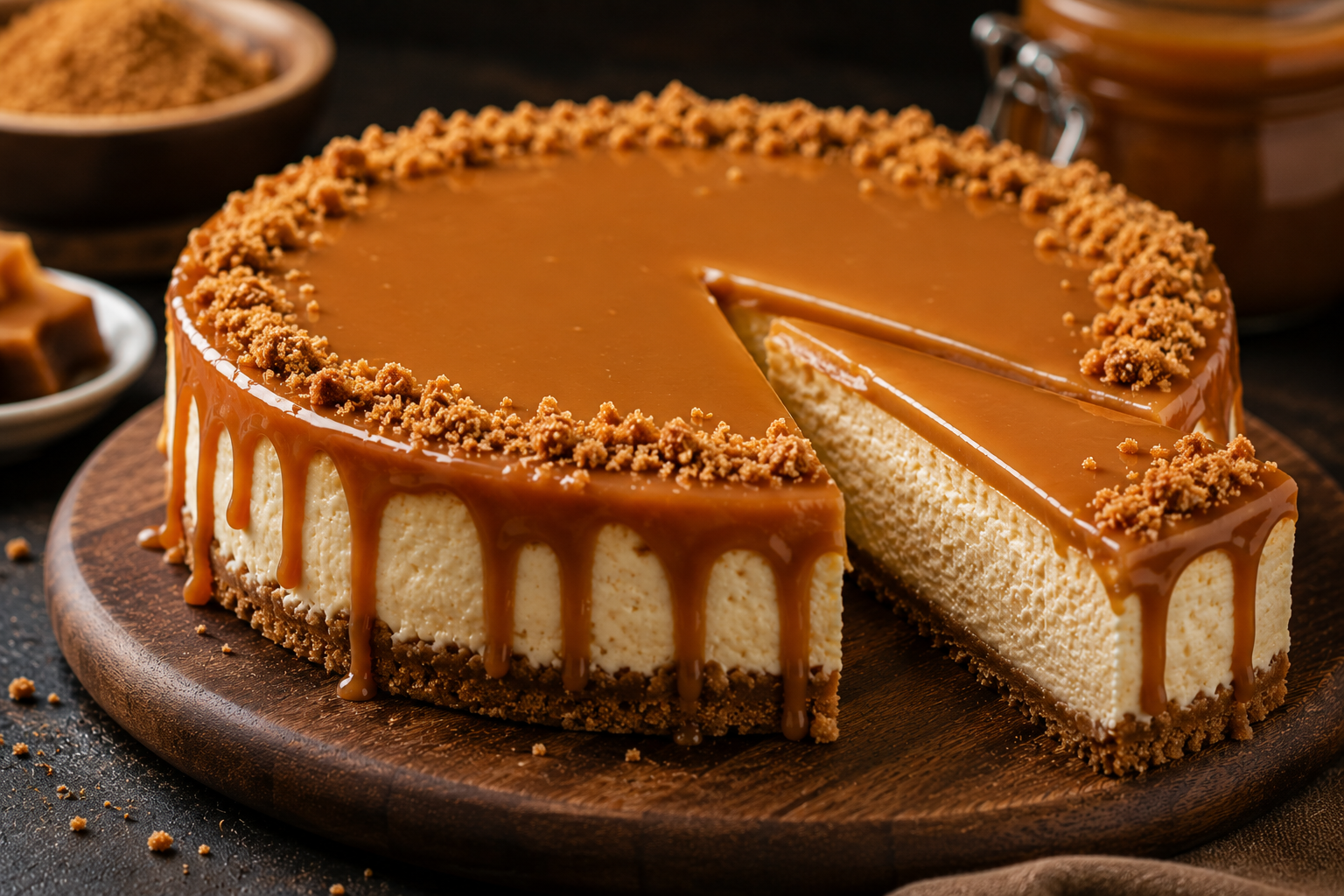
    Caramel cheesecake succeeds or fails on one thing more than any other: the caramel itself. Get a smooth, properly emulsified caramel, and the cheesecake underneath barely needs to compete for attention. Get a grainy, split, or overly stiff caramel, and no amount of technique on the cheesecake base will save the slice. That’s why most of the real questions people have about this dessert aren’t about the cheesecake at all — they’re about caramel-making, and specifically, when it’s fine to reach for a canned shortcut instead of making it from scratch.

    As a pastry chef, I get asked constantly about the order you add ingredients when making caramel, whether milk works as a cream substitute, and whether canned caramel — Carnation caramel being the most common brand people ask about — is a legitimate shortcut or a compromise. This guide covers all of it, then walks you through a full recipe using both approaches.

    Key Takeaways

    • Caramel-making order matters: butter goes in before cream, not the other way around, to avoid seizing.
    • Milk can replace cream in caramel, but it produces a thinner, less stable result that won’t set as firmly.
    • Canned caramel (like Carnation) is a legitimate, widely used shortcut for cheesecake toppings — it sets softer than homemade caramel unless slightly reduced.
    • Caramel added to a warm base too early can split or thin out; it’s usually salvageable by cooling both components before combining.
    • Full recipe and an FAQ built from real reader questions are below.

    How Do You Make a Simple Caramel Cheesecake?

    The simplest version relies on store-bought caramel rather than cooking your own sugar syrup — swirl or layer a canned caramel like Carnation directly into a basic cream cheese filling, and you get real caramel flavour without the risk of a scorched or seized batch. For a truly minimal version, some recipes get down to essentially three components: cream cheese, canned caramel, and a pre-made crust, with the caramel doing double duty as both flavour and sweetener.

    Whether you make your own caramel or use canned, the two combine the same way: caramel folds into cream cheese filling far more smoothly when both are close to room temperature. Cold caramel straight from the fridge tends to clump rather than blend evenly.

    Can You Mix Caramel with Cream Cheese?

    Yes, and it’s one of the more forgiving flavour combinations in cheesecake — cream cheese’s tang balances caramel’s sweetness in the same way it does with fruit. The main technical question people run into is caramel-making itself, not the mixing step. A few points worth knowing if you’re making your own:

    • Butter goes in before cream, not after. Adding butter to your melted sugar first, then cream once the butter is fully incorporated, helps prevent the mixture from seizing into a hard, grainy mass.
    • Milk can replace cream, but the result is thinner. Cream’s higher fat content is what gives caramel its rich body and helps it set to a spreadable consistency. Milk-based caramel stays looser and won’t firm up the same way once cooled, which matters if you’re using it as a layer inside a cheesecake rather than a drizzle on top.
    • Condensed milk works as a shortcut for a specific style. Simmering a can of sweetened condensed milk (or using a pre-made dulce de leche) gives you a thick, already-sweetened caramel without cooking sugar from scratch — closer to Carnation caramel’s texture than a classic cream-based caramel.
    • If you’ve already added cream to your caramel too early — before the sugar fully melted, or while the mixture was still too hot — it often looks broken or grainy rather than smooth. In most cases, gently reheating the mixture over low heat while whisking continuously will bring it back together; a hand blender can help re-emulsify a stubborn batch if whisking alone doesn’t fully smooth it out.

    Is Carnation Caramel a Good Shortcut?

    Yes — Carnation caramel (the canned, ready-made caramel widely available in Canadian grocery stores) is a legitimate shortcut used in everything from banoffee pie to cheesecake toppings, not just a lesser substitute for homemade. Straight from the can, it’s softer and more spoonable than a stovetop caramel cooked to a firmer set, which is exactly why it works well swirled through a filling but needs a bit of help if you want it to hold a firmer layer on top.

    If you want it to set harder — for a cleaner caramel layer rather than a soft swirl — gently simmering the canned caramel for a few extra minutes to reduce some of the moisture before chilling will firm it up. Used straight from the can without reducing, it stays soft and glossy, which is ideal for swirling but won’t hold a sharp-edged layer the way a cooked-down version will.

    When Should You Put Caramel on Top of Cheesecake?

    Always after the cheesecake has fully cooled and set — adding caramel while the cheesecake is still warm causes it to run off the sides rather than sit as a defined layer. If you’re using canned caramel straight from the fridge, let it come to room temperature first so it spreads evenly rather than tearing the surface of the chilled cheesecake underneath.

    As for whether cheesecake deserves its reputation as an unhealthy dessert — that’s more about rich, calorie-dense desserts in general than cheesecake specifically. A caramel topping adds sugar on top of an already rich base, so portion size matters more here than with a plainer cheesecake, but one slice isn’t going to have an outsized effect on its own.

    The Recipe: Baked Caramel Cheesecake

    Caramel Cheesecake

    Caramel Cheesecake

    Flavor & Style: A decadent baked caramel cheesecake featuring a spiced graham cracker and margarine crust, a rich cream cheese and dulce de leche filling, and a golden finish.
    Yield & Sizing: Designed to make 12 servings.
    Timing: Requires a total preparation time of 4 hours and 15 minutes, along with 1 hour and 5 minutes of total cooking time (including initial high-heat baking followed by reduced-heat baking), plus at least 4 hours of chilling time before serving cold.
    Prep Time 4 hours 15 minutes
    Cook Time 1 hour 5 minutes
    Total Time 5 hours 20 minutes
    Servings: 12
    Course: Dessert

    Ingredients
      

    Crust:
    • cup margarine melted
    • ¼ teaspoon ground cinnamon
    • 1 ½ cups graham cracker crumbs
    Filling:
    • 2 teaspoons vanilla extract
    • 4 8-ounce packages cream cheese, softened
    • ½ cup sour cream
    • 5 large eggs
    • 1 cup Dulce de Leche
    • 1 ¼ cups white sugar

    Method
     

    1. Preheat oven to 475°F & place a skillet with half an inch of water inside.
    2. Combine the ingredients for crust in a bowl. Line a large pie pan with parchment paper and spread crust onto pan. Press firmly. Cover it with foil & keep it in the freezer until ready to use.
    3. Combine all for filling apart from the eggs in a bowl. Mix in eggs 1 at a time & beat until fully blended.
    4. Remove the crust & pour in the filling, spreading it evenly. Place the pie pan into the heated skillet in the oven and bake for about 12 minutes.
    5. Reduce the heat to 350°F. Continue to bake for about 50 minutes, or until the top of the cake is golden. Remove it from the oven & move the skillet onto a wire rack to cool.
    6. Refrigerate for at least 4 hours.
    7. Serve cold.

    Frequently Asked Questions

    • What is the 3-ingredient cheesecake? A stripped-down version using cream cheese, canned caramel, and a pre-made crust, skipping eggs and baking entirely for a no-bake result.
    • Can you mix caramel with cream cheese? Yes — the tang of cream cheese balances caramel’s sweetness well; just make sure both are close to room temperature so they combine smoothly.
    • What does adding milk to caramel do? It produces a thinner caramel that won’t set as firmly as one made with cream, since cream’s higher fat content is what gives caramel its body.
    • Do you add butter or cream first when making caramel? Butter first — adding it before the cream helps prevent the caramel from seizing into a grainy mass.
    • What happens if you use milk instead of cream in caramel? You get a looser, less stable caramel that stays soft rather than firming up on cooling.
    • Can you use Carnation caramel on top of cheesecake? Yes — it’s a common, reliable shortcut, though it’s softer straight from the can and benefits from a brief simmer if you want it to set into a firmer layer.
    • Will Carnation caramel set hard? Not straight from the can — it stays soft and spoonable. Simmering it briefly to reduce moisture before chilling will firm it up.
    • I added cream to caramel too early. What should I do? Gently reheat the mixture over low heat while whisking continuously to bring it back together; a hand blender can help if whisking alone doesn’t fully smooth it out.
    • Can you use condensed milk instead of cream for caramel? Yes — simmering condensed milk produces a thick, already-sweetened caramel similar in texture to dulce de leche or canned caramel.

    Final Thoughts

    Caramel cheesecake really comes down to respecting the caramel — whether you’re cooking your own from scratch or reaching for a can of Carnation, the technique that matters most is temperature: warm enough to blend smoothly, cool enough not to melt into the filling. Get that right, and the rest of the cheesecake is standard technique you likely already know.

    Try the recipe this week, and if your caramel splits or won’t set, leave a comment — I’ll help you figure out exactly where it went off track.

    Orange Cheesecake: A Pastry Chef’s Guide to Nailing This Creamsicle-Style Classic

    Orange Cheesecake
    Orange Cheesecake

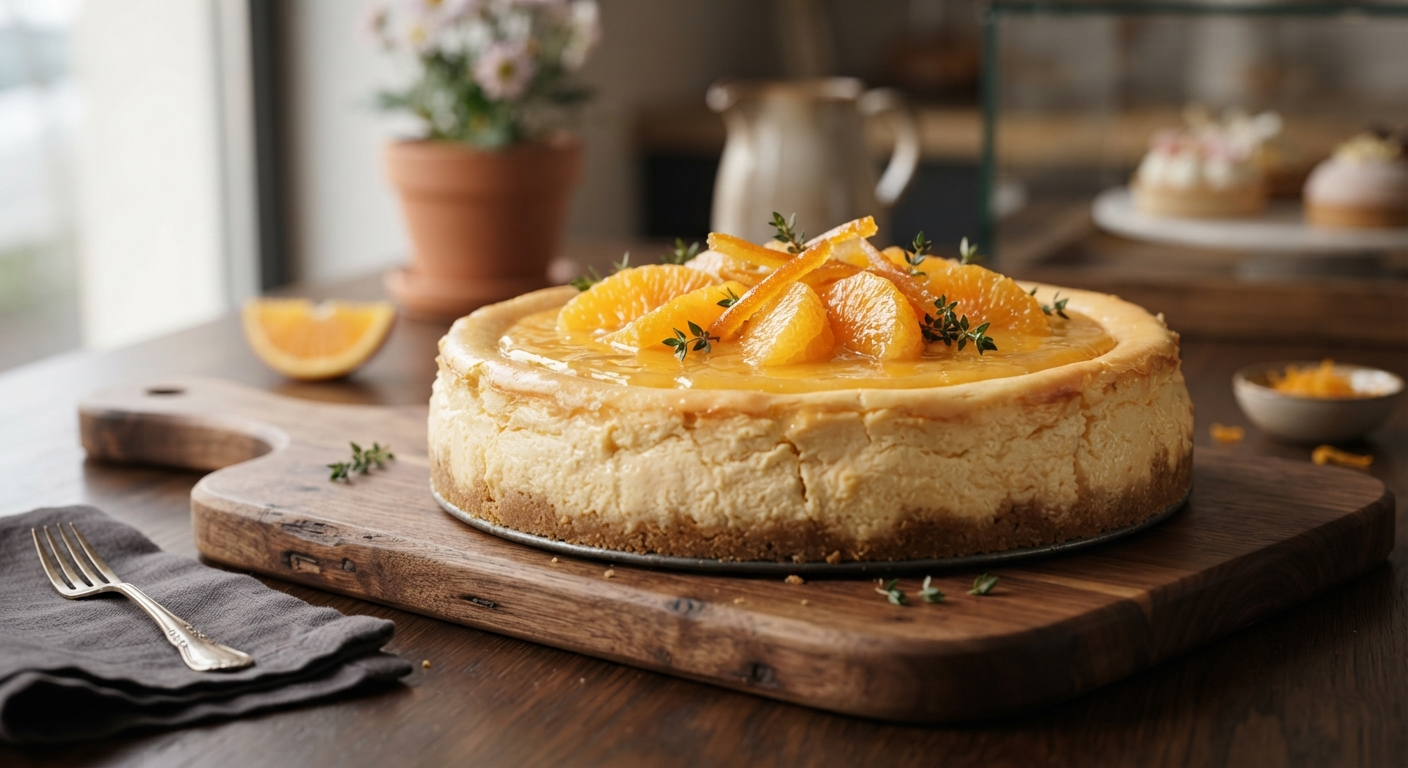
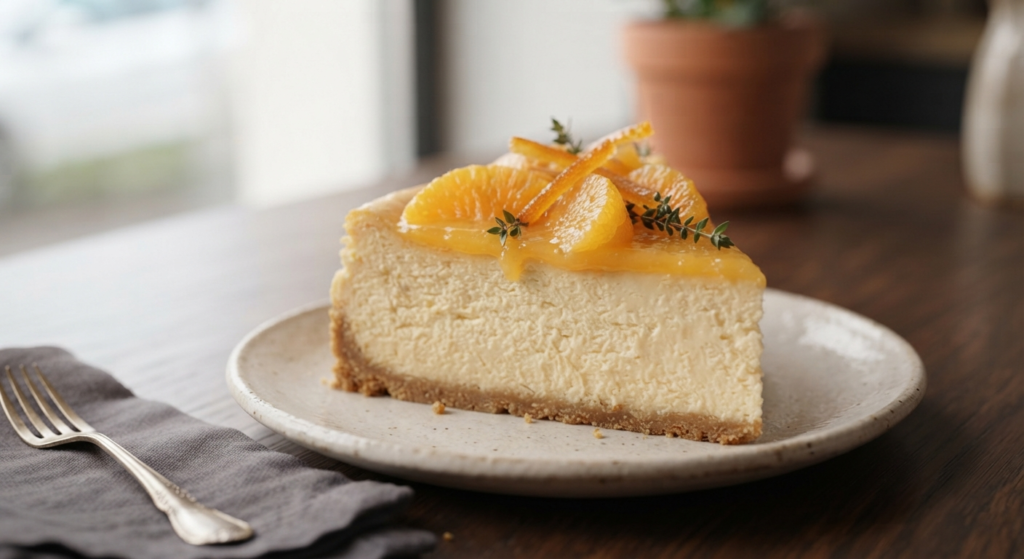
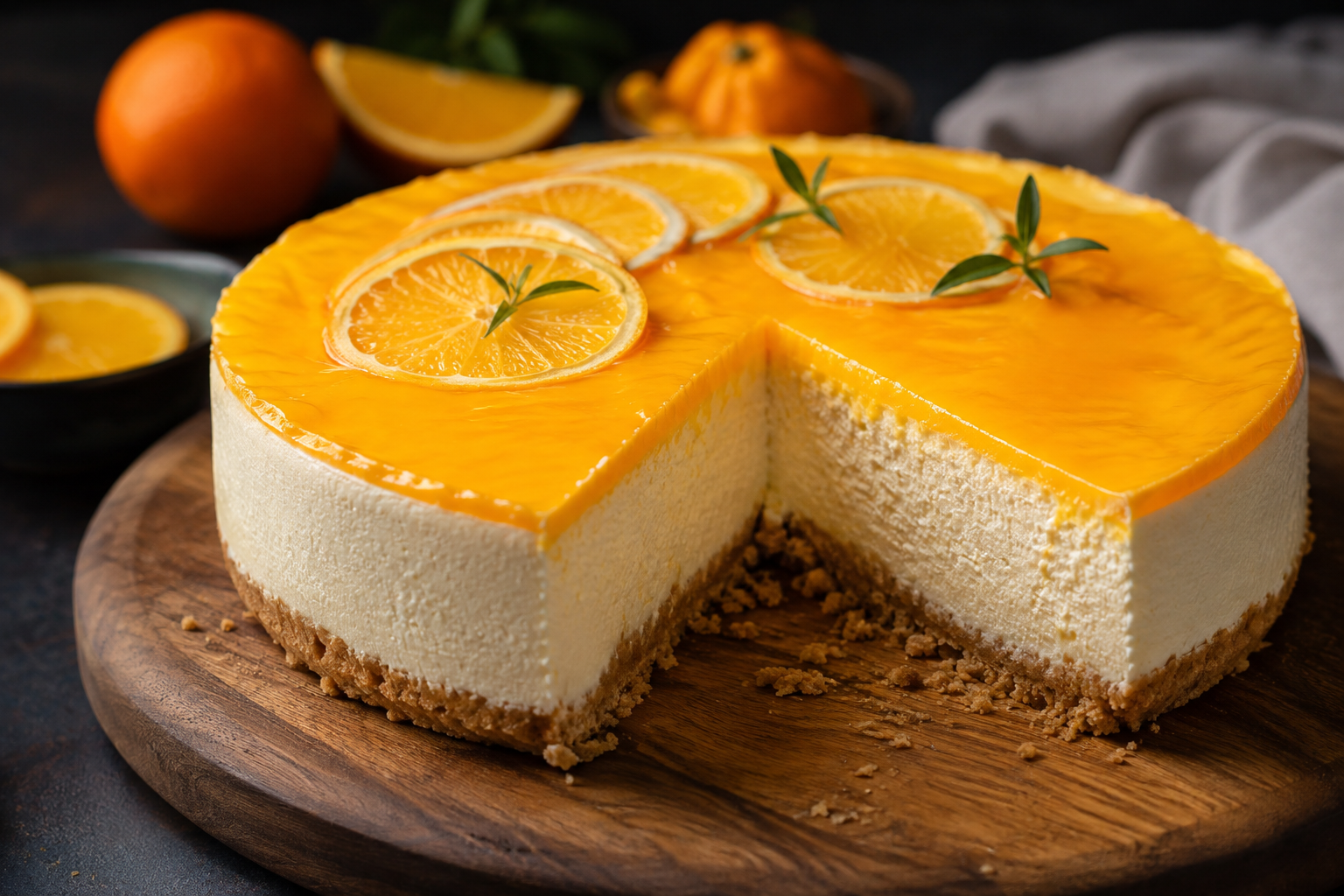
    Orange doesn’t get the same spotlight as lemon or lime in the cheesecake world, but it deserves more credit than it gets. Where lemon leans sharp and lime leans tart, orange brings something softer and sweeter — closer to a creamsicle than a punch of citrus. Built on a classic cream cheese base, orange cheesecake gives you that familiar dense, rich texture with just enough brightness to keep it from feeling heavy, which is exactly why it shows up so often at Toronto bakeries once orange season hits.

    As a pastry chef, most of the questions I get about this dessert aren’t really about orange at all — they’re about cheesecake technique in general: what makes cheesecake genuinely hard to get right, the most common ways it goes wrong, and what people mean when they ask for a “Philadelphia” cheesecake specifically. This guide covers all of that, then gives you our precise tested recipe.

    Key Takeaways

    • Cheesecake has a reputation for being difficult that’s mostly about a few specific failure points — temperature control, mixing, and cooling — not the recipe itself.
    • “Philadelphia cheesecake” typically just means a recipe built specifically around Philadelphia-brand cream cheese, prized for its consistent texture.
    • Most cheesecake fixes (cracks, not setting, dense texture) trace back to the same three culprits every time.
    • Orange creamsicle cheesecake balances vanilla and fresh orange zest against the tang of cream cheese and sour cream.
    • Full recipe and an FAQ from real reader questions are below.

    What’s the Best Recipe for Orange Cheesecake?

    The best version leans into orange’s natural sweetness rather than fighting it with too much acidity. Unlike lemon or lime cheesecakes, which typically rely on a large volume of juice to carry the flavour, a good orange cheesecake usually gets most of its punch from fresh zest, with juice and sour cream balancing the texture nicely. That’s the difference between an orange cheesecake that tastes like dessert and one that tastes like it’s trying too hard to be a lemon cheesecake with different fruit.

    If you’re chasing the “best cheesecake recipe ever” in a general sense, the answer isn’t really about a specific formula — it’s about nailing the handful of technique points that separate a bakery-quality slice from a home attempt that cracks or sinks in the middle. That’s worth walking through before you even get to the orange-specific details.

    What Actually Makes Cheesecake Hard to Make?

    Cheesecake has a reputation as one of the more difficult desserts, and it’s earned — but not for the reason most people assume. It’s not a complicated ingredient list or technique; it’s that cheesecake is unusually sensitive to small mistakes compared to a typical cake. A few degrees too hot, a minute too long in the oven, or too much air beaten into the batter, and you’ll see it in cracks or a sunken centre. Cake batter is forgiving of imprecision in a way that a custard-based filling simply isn’t.

    That sensitivity is also why cheesecake gets called one of the “hardest” or most technically demanding desserts in general baking conversations — it rewards careful technique more than creativity, which trips people up if they’re used to cake recipes where being slightly off doesn’t show.

    What Are the Most Common Cheesecake Mistakes?

    Nearly every cheesecake problem comes down to one of a few repeat offenders:

    • Overmixing after the eggs go in. This beats in extra air, which expands in the oven and collapses on cooling — the leading cause of cracks.
    • Overbaking. Baking until it looks fully set in the oven usually means it’s already overdone.
    • A cheesecake that won’t set. This is almost always either underbaking, not chilling long enough afterward, or using low-fat cream cheese, which doesn’t hold structure the way full-fat does.
    • A dense, heavy texture instead of light and airy. Usually caused by cold ingredients that don’t blend smoothly.

    If your cheesecake has already failed — cracked, sunk, or didn’t set — it’s rarely a total loss. A cracked top can be covered with a fruit topping or whipped cream; a cheesecake that didn’t fully set can sometimes be rescued by chilling it longer, or repurposed as a parfait-style dessert layered with crumbled crust and fruit instead of served as clean slices.

    Orange Cheesecake

    Orange Cheesecake

    Prep Time 4 hours 15 minutes
    Cook Time 1 hour 15 minutes
    Total Time 5 hours 30 minutes
    Servings: 12
    Course: Dessert

    Ingredients
      

    For the Crust:
    • cup margarine melted
    • ¼ teaspoon ground cinnamon
    • 1 ½ cups graham cracker crumbs
    For the Filling:
    • ½ cup sour cream
    • 4 8-ounce packages cream cheese, softened
    • 2 teaspoons vanilla extract
    • 1 ¼ cups white sugar
    • Zest of 2 oranges
    • 5 large eggs

    Method
     

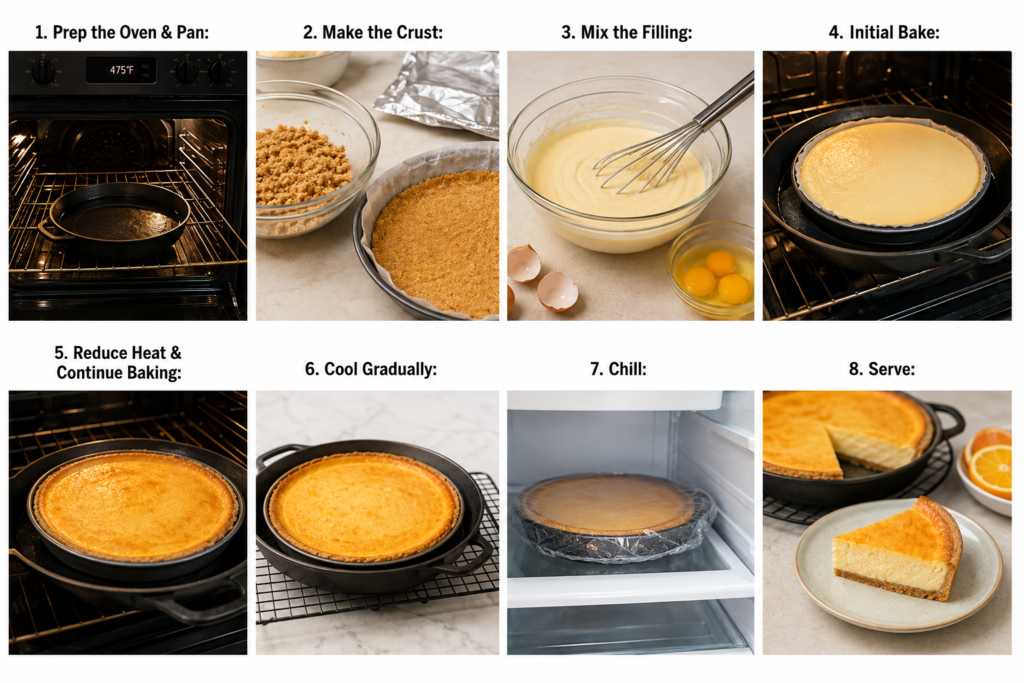
    1. Prep the Oven & Pan: Preheat oven to 475°F (246°C) and place a skillet with half an inch of water inside the oven.
    2. Make the Crust: Combine the ingredients for the crust in a bowl. Line a large pie pan with parchment paper and spread the crust onto the pan, pressing it firmly. Cover it with foil and keep it in the freezer until ready to use.
    3. Mix the Filling: Combine all the ingredients for the filling apart from the eggs in a bowl and mix well. Add in the eggs one at a time and beat until fully blended.
    4. Initial Bake: Remove the crust from the freezer and pour in the filling, spreading it evenly. Place the pie pan into the heated skillet in the oven and bake for about 12 minutes at 475°F.
    5. Reduce Heat & Continue Baking: Reduce the heat to 350°F (175°C). Continue to bake for about 50 minutes, or until the top of the cake is golden.
    6. Cool Gradually: Remove it from the oven and carefully move the skillet onto a wire rack to cool.
    7. Chill: Refrigerate for at least 4 hours.
    8. Serve: Serve cold and enjoy!
    Orange cheesecake directions

    Frequently Asked Questions

    • What’s the hardest cheesecake to make? There’s no single hardest recipe — cheesecake in general is technically demanding because it’s unusually sensitive to overmixing, overbaking, and rapid cooling.
    • What makes cheesecake hard to make? Its custard-like structure has very little margin for error compared to standard cake batter.
    • What is the secret to a good cheesecake? Room-temperature ingredients, minimal mixing once the eggs are added, and a controlled cooling process.
    • Why use a skillet with water in the oven? It creates a gentle moisture environment (a water bath method) that helps the cheesecake bake evenly and prevents surface cracking.
    • How can I make a light and airy cheesecake? Use room-temperature ingredients so the batter blends smoothly without incorporating excess air.

    Final Thoughts

    Orange cheesecake doesn’t need any special technique beyond what makes any great cheesecake work — room-temperature ingredients, gentle mixing, and proper chilling. The orange creamsicle profile gives you a wonderfully sweet, soft citrus note that stands out from the usual lemon or lime options.

    Give the recipe a try this week, and if your centre cracks or won’t set, leave a comment — I’ll help you figure out exactly which step needs adjusting!