
Caramel cheesecake succeeds or fails on one thing more than any other: the caramel itself. Get a smooth, properly emulsified caramel, and the cheesecake underneath barely needs to compete for attention. Get a grainy, split, or overly stiff caramel, and no amount of technique on the cheesecake base will save the slice. That’s why most of the real questions people have about this dessert aren’t about the cheesecake at all — they’re about caramel-making, and specifically, when it’s fine to reach for a canned shortcut instead of making it from scratch.
As a pastry chef, I get asked constantly about the order you add ingredients when making caramel, whether milk works as a cream substitute, and whether canned caramel — Carnation caramel being the most common brand people ask about — is a legitimate shortcut or a compromise. This guide covers all of it, then walks you through a full recipe using both approaches.
Key Takeaways
- Caramel-making order matters: butter goes in before cream, not the other way around, to avoid seizing.
- Milk can replace cream in caramel, but it produces a thinner, less stable result that won’t set as firmly.
- Canned caramel (like Carnation) is a legitimate, widely used shortcut for cheesecake toppings — it sets softer than homemade caramel unless slightly reduced.
- Caramel added to a warm base too early can split or thin out; it’s usually salvageable by cooling both components before combining.
- Full recipe and an FAQ built from real reader questions are below.
How Do You Make a Simple Caramel Cheesecake?
The simplest version relies on store-bought caramel rather than cooking your own sugar syrup — swirl or layer a canned caramel like Carnation directly into a basic cream cheese filling, and you get real caramel flavour without the risk of a scorched or seized batch. For a truly minimal version, some recipes get down to essentially three components: cream cheese, canned caramel, and a pre-made crust, with the caramel doing double duty as both flavour and sweetener.
Whether you make your own caramel or use canned, the two combine the same way: caramel folds into cream cheese filling far more smoothly when both are close to room temperature. Cold caramel straight from the fridge tends to clump rather than blend evenly.
Can You Mix Caramel with Cream Cheese?
Yes, and it’s one of the more forgiving flavour combinations in cheesecake — cream cheese’s tang balances caramel’s sweetness in the same way it does with fruit. The main technical question people run into is caramel-making itself, not the mixing step. A few points worth knowing if you’re making your own:
- Butter goes in before cream, not after. Adding butter to your melted sugar first, then cream once the butter is fully incorporated, helps prevent the mixture from seizing into a hard, grainy mass.
- Milk can replace cream, but the result is thinner. Cream’s higher fat content is what gives caramel its rich body and helps it set to a spreadable consistency. Milk-based caramel stays looser and won’t firm up the same way once cooled, which matters if you’re using it as a layer inside a cheesecake rather than a drizzle on top.
- Condensed milk works as a shortcut for a specific style. Simmering a can of sweetened condensed milk (or using a pre-made dulce de leche) gives you a thick, already-sweetened caramel without cooking sugar from scratch — closer to Carnation caramel’s texture than a classic cream-based caramel.
- If you’ve already added cream to your caramel too early — before the sugar fully melted, or while the mixture was still too hot — it often looks broken or grainy rather than smooth. In most cases, gently reheating the mixture over low heat while whisking continuously will bring it back together; a hand blender can help re-emulsify a stubborn batch if whisking alone doesn’t fully smooth it out.
Is Carnation Caramel a Good Shortcut?
Yes — Carnation caramel (the canned, ready-made caramel widely available in Canadian grocery stores) is a legitimate shortcut used in everything from banoffee pie to cheesecake toppings, not just a lesser substitute for homemade. Straight from the can, it’s softer and more spoonable than a stovetop caramel cooked to a firmer set, which is exactly why it works well swirled through a filling but needs a bit of help if you want it to hold a firmer layer on top.
If you want it to set harder — for a cleaner caramel layer rather than a soft swirl — gently simmering the canned caramel for a few extra minutes to reduce some of the moisture before chilling will firm it up. Used straight from the can without reducing, it stays soft and glossy, which is ideal for swirling but won’t hold a sharp-edged layer the way a cooked-down version will.
When Should You Put Caramel on Top of Cheesecake?
Always after the cheesecake has fully cooled and set — adding caramel while the cheesecake is still warm causes it to run off the sides rather than sit as a defined layer. If you’re using canned caramel straight from the fridge, let it come to room temperature first so it spreads evenly rather than tearing the surface of the chilled cheesecake underneath.
As for whether cheesecake deserves its reputation as an unhealthy dessert — that’s more about rich, calorie-dense desserts in general than cheesecake specifically. A caramel topping adds sugar on top of an already rich base, so portion size matters more here than with a plainer cheesecake, but one slice isn’t going to have an outsized effect on its own.
The Recipe: Baked Caramel Cheesecake
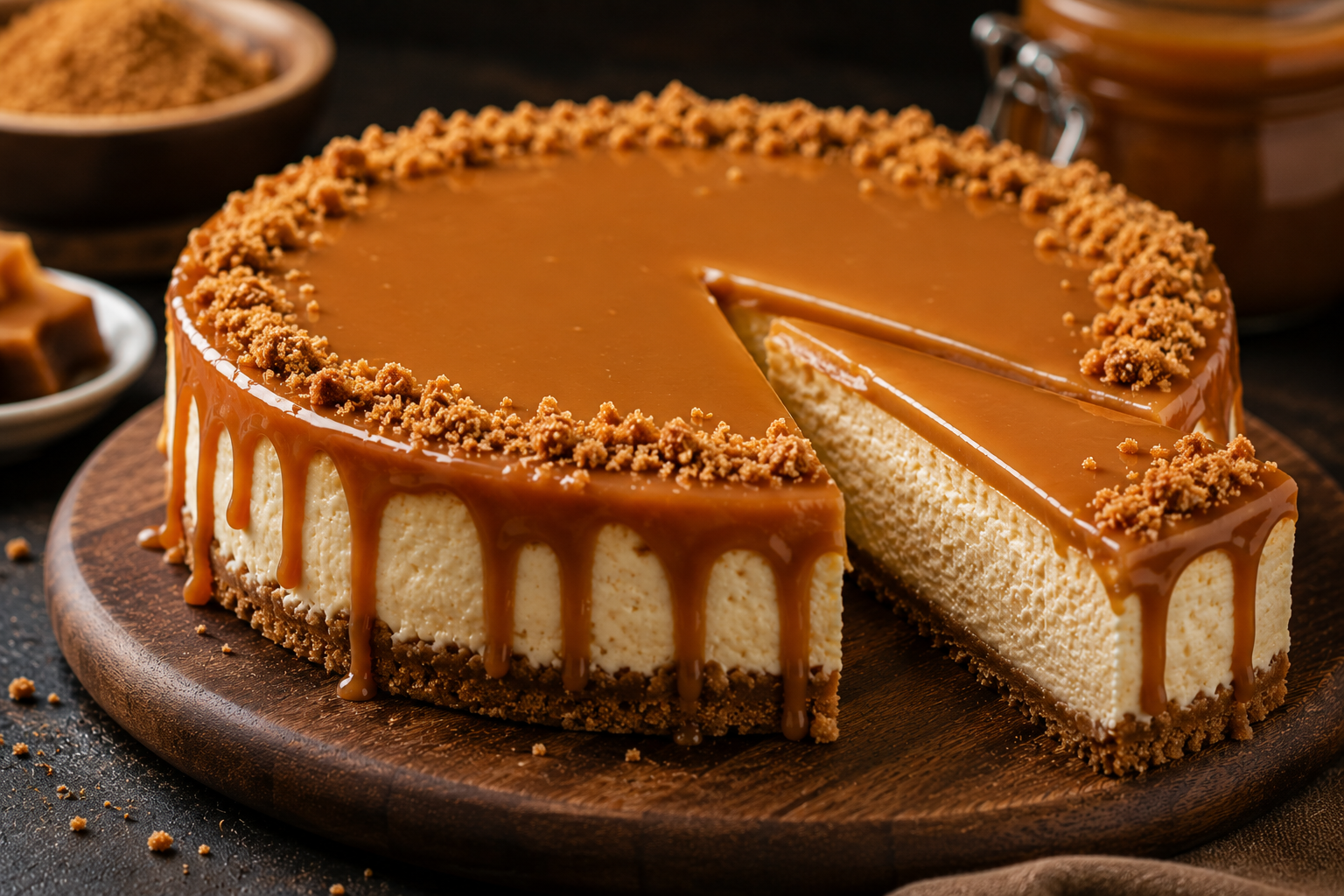
Caramel Cheesecake
Ingredients
Method
- Preheat oven to 475°F & place a skillet with half an inch of water inside.
- Combine the ingredients for crust in a bowl. Line a large pie pan with parchment paper and spread crust onto pan. Press firmly. Cover it with foil & keep it in the freezer until ready to use.
- Combine all for filling apart from the eggs in a bowl. Mix in eggs 1 at a time & beat until fully blended.
- Remove the crust & pour in the filling, spreading it evenly. Place the pie pan into the heated skillet in the oven and bake for about 12 minutes.
- Reduce the heat to 350°F. Continue to bake for about 50 minutes, or until the top of the cake is golden. Remove it from the oven & move the skillet onto a wire rack to cool.
- Refrigerate for at least 4 hours.
- Serve cold.
Frequently Asked Questions
- What is the 3-ingredient cheesecake? A stripped-down version using cream cheese, canned caramel, and a pre-made crust, skipping eggs and baking entirely for a no-bake result.
- Can you mix caramel with cream cheese? Yes — the tang of cream cheese balances caramel’s sweetness well; just make sure both are close to room temperature so they combine smoothly.
- What does adding milk to caramel do? It produces a thinner caramel that won’t set as firmly as one made with cream, since cream’s higher fat content is what gives caramel its body.
- Do you add butter or cream first when making caramel? Butter first — adding it before the cream helps prevent the caramel from seizing into a grainy mass.
- What happens if you use milk instead of cream in caramel? You get a looser, less stable caramel that stays soft rather than firming up on cooling.
- Can you use Carnation caramel on top of cheesecake? Yes — it’s a common, reliable shortcut, though it’s softer straight from the can and benefits from a brief simmer if you want it to set into a firmer layer.
- Will Carnation caramel set hard? Not straight from the can — it stays soft and spoonable. Simmering it briefly to reduce moisture before chilling will firm it up.
- I added cream to caramel too early. What should I do? Gently reheat the mixture over low heat while whisking continuously to bring it back together; a hand blender can help if whisking alone doesn’t fully smooth it out.
- Can you use condensed milk instead of cream for caramel? Yes — simmering condensed milk produces a thick, already-sweetened caramel similar in texture to dulce de leche or canned caramel.
Final Thoughts
Caramel cheesecake really comes down to respecting the caramel — whether you’re cooking your own from scratch or reaching for a can of Carnation, the technique that matters most is temperature: warm enough to blend smoothly, cool enough not to melt into the filling. Get that right, and the rest of the cheesecake is standard technique you likely already know.
Try the recipe this week, and if your caramel splits or won’t set, leave a comment — I’ll help you figure out exactly where it went off track.