
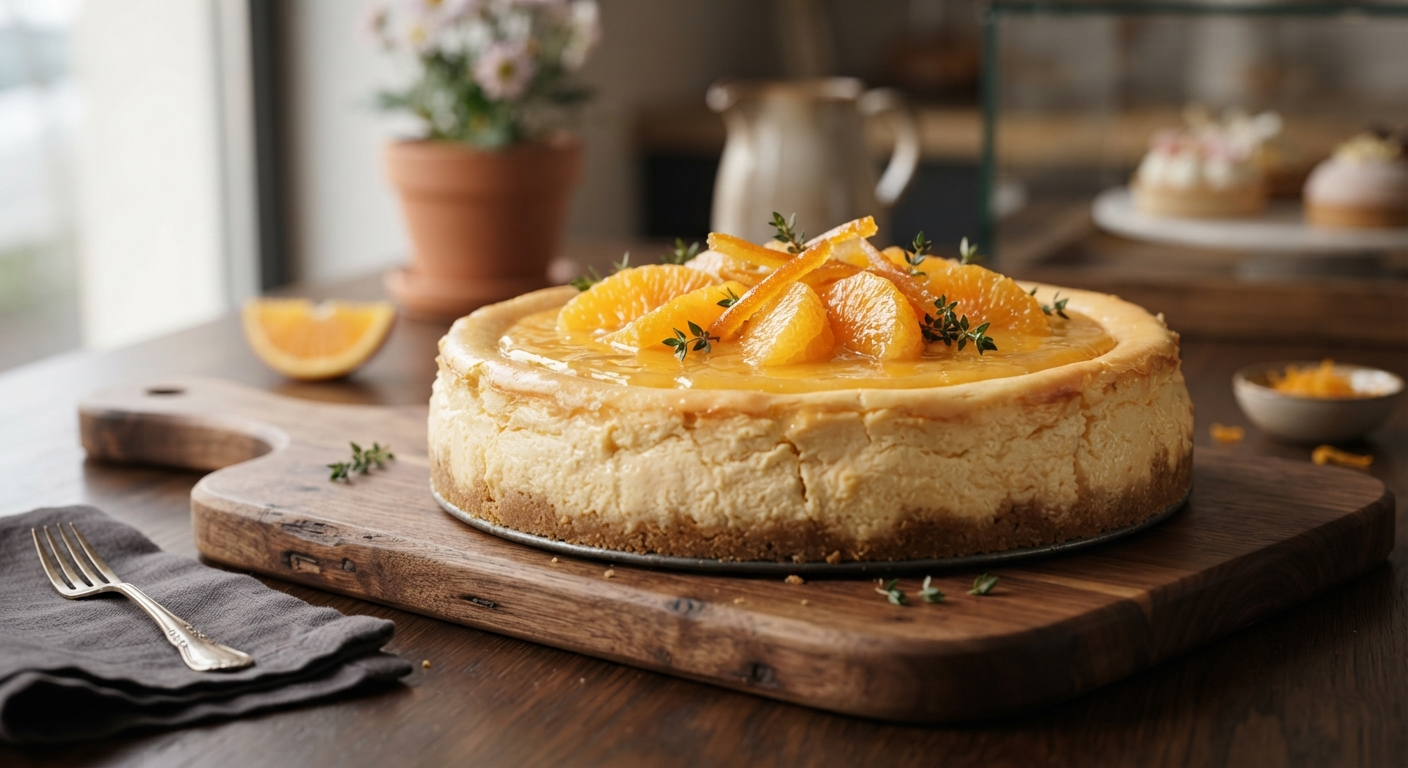
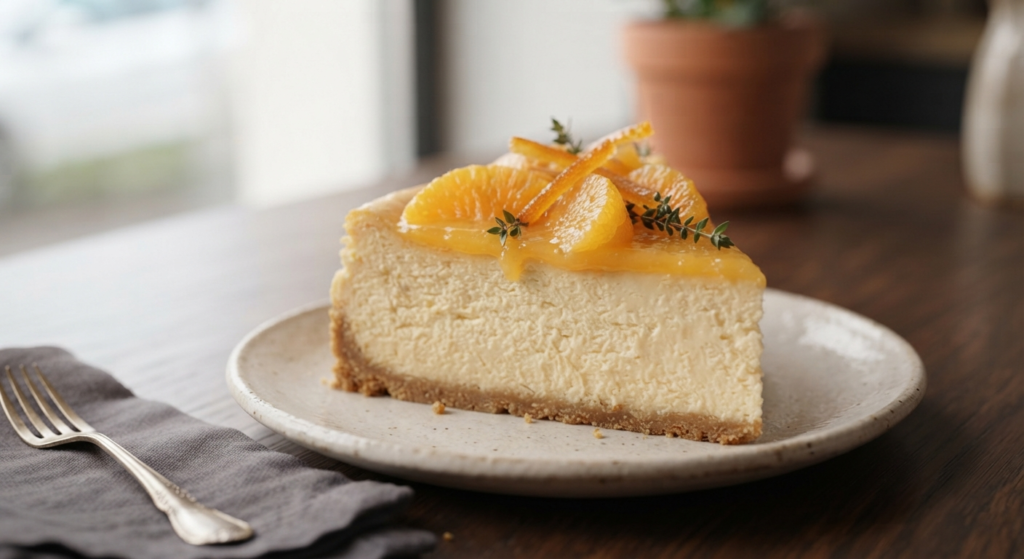
Orange doesn’t get the same spotlight as lemon or lime in the cheesecake world, but it deserves more credit than it gets. Where lemon leans sharp and lime leans tart, orange brings something softer and sweeter — closer to a creamsicle than a punch of citrus. Built on a classic cream cheese base, orange cheesecake gives you that familiar dense, rich texture with just enough brightness to keep it from feeling heavy, which is exactly why it shows up so often at Toronto bakeries once orange season hits.
As a pastry chef, most of the questions I get about this dessert aren’t really about orange at all — they’re about cheesecake technique in general: what makes cheesecake genuinely hard to get right, the most common ways it goes wrong, and what people mean when they ask for a “Philadelphia” cheesecake specifically. This guide covers all of that, then gives you our precise tested recipe.
Key Takeaways
- Cheesecake has a reputation for being difficult that’s mostly about a few specific failure points — temperature control, mixing, and cooling — not the recipe itself.
- “Philadelphia cheesecake” typically just means a recipe built specifically around Philadelphia-brand cream cheese, prized for its consistent texture.
- Most cheesecake fixes (cracks, not setting, dense texture) trace back to the same three culprits every time.
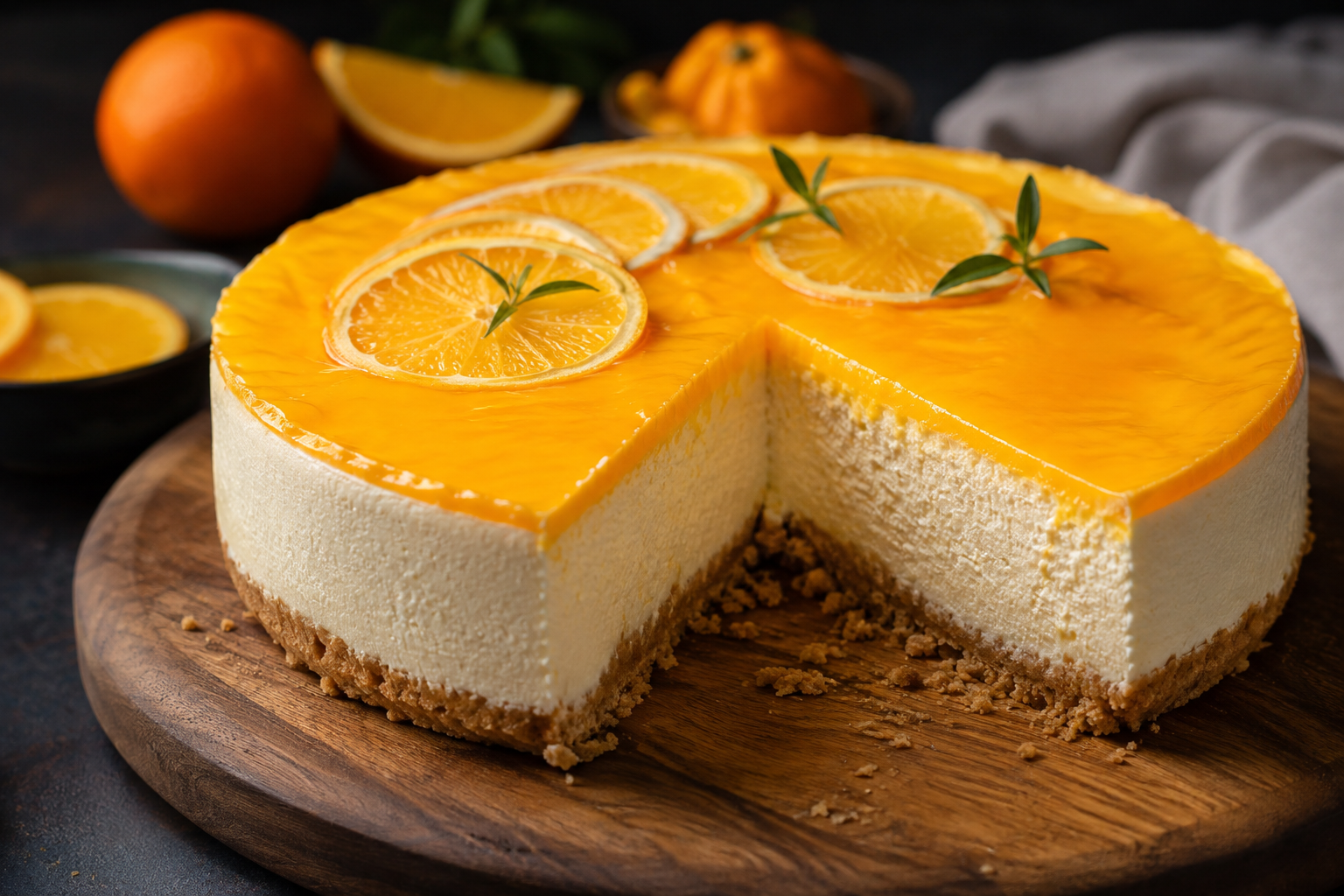
- Orange creamsicle cheesecake balances vanilla and fresh orange zest against the tang of cream cheese and sour cream.
- Full recipe and an FAQ from real reader questions are below.
What’s the Best Recipe for Orange Cheesecake?
The best version leans into orange’s natural sweetness rather than fighting it with too much acidity. Unlike lemon or lime cheesecakes, which typically rely on a large volume of juice to carry the flavour, a good orange cheesecake usually gets most of its punch from fresh zest, with juice and sour cream balancing the texture nicely. That’s the difference between an orange cheesecake that tastes like dessert and one that tastes like it’s trying too hard to be a lemon cheesecake with different fruit.
If you’re chasing the “best cheesecake recipe ever” in a general sense, the answer isn’t really about a specific formula — it’s about nailing the handful of technique points that separate a bakery-quality slice from a home attempt that cracks or sinks in the middle. That’s worth walking through before you even get to the orange-specific details.
What Actually Makes Cheesecake Hard to Make?
Cheesecake has a reputation as one of the more difficult desserts, and it’s earned — but not for the reason most people assume. It’s not a complicated ingredient list or technique; it’s that cheesecake is unusually sensitive to small mistakes compared to a typical cake. A few degrees too hot, a minute too long in the oven, or too much air beaten into the batter, and you’ll see it in cracks or a sunken centre. Cake batter is forgiving of imprecision in a way that a custard-based filling simply isn’t.
That sensitivity is also why cheesecake gets called one of the “hardest” or most technically demanding desserts in general baking conversations — it rewards careful technique more than creativity, which trips people up if they’re used to cake recipes where being slightly off doesn’t show.
What Are the Most Common Cheesecake Mistakes?
Nearly every cheesecake problem comes down to one of a few repeat offenders:
- Overmixing after the eggs go in. This beats in extra air, which expands in the oven and collapses on cooling — the leading cause of cracks.
- Overbaking. Baking until it looks fully set in the oven usually means it’s already overdone.
- A cheesecake that won’t set. This is almost always either underbaking, not chilling long enough afterward, or using low-fat cream cheese, which doesn’t hold structure the way full-fat does.
- A dense, heavy texture instead of light and airy. Usually caused by cold ingredients that don’t blend smoothly.
If your cheesecake has already failed — cracked, sunk, or didn’t set — it’s rarely a total loss. A cracked top can be covered with a fruit topping or whipped cream; a cheesecake that didn’t fully set can sometimes be rescued by chilling it longer, or repurposed as a parfait-style dessert layered with crumbled crust and fruit instead of served as clean slices.
Ingredients
Method
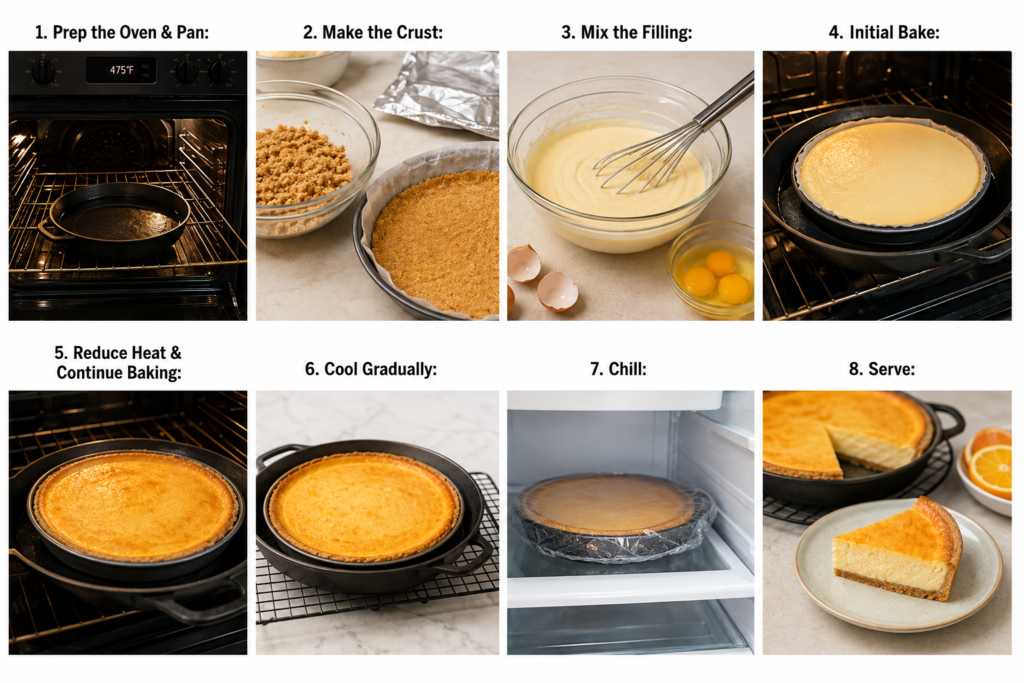
- Prep the Oven & Pan: Preheat oven to 475°F (246°C) and place a skillet with half an inch of water inside the oven.
- Make the Crust: Combine the ingredients for the crust in a bowl. Line a large pie pan with parchment paper and spread the crust onto the pan, pressing it firmly. Cover it with foil and keep it in the freezer until ready to use.
- Mix the Filling: Combine all the ingredients for the filling apart from the eggs in a bowl and mix well. Add in the eggs one at a time and beat until fully blended.
- Initial Bake: Remove the crust from the freezer and pour in the filling, spreading it evenly. Place the pie pan into the heated skillet in the oven and bake for about 12 minutes at 475°F.
- Reduce Heat & Continue Baking: Reduce the heat to 350°F (175°C). Continue to bake for about 50 minutes, or until the top of the cake is golden.
- Cool Gradually: Remove it from the oven and carefully move the skillet onto a wire rack to cool.
- Chill: Refrigerate for at least 4 hours.
- Serve: Serve cold and enjoy!
Frequently Asked Questions
- What’s the hardest cheesecake to make? There’s no single hardest recipe — cheesecake in general is technically demanding because it’s unusually sensitive to overmixing, overbaking, and rapid cooling.
- What makes cheesecake hard to make? Its custard-like structure has very little margin for error compared to standard cake batter.
- What is the secret to a good cheesecake? Room-temperature ingredients, minimal mixing once the eggs are added, and a controlled cooling process.
- Why use a skillet with water in the oven? It creates a gentle moisture environment (a water bath method) that helps the cheesecake bake evenly and prevents surface cracking.
- How can I make a light and airy cheesecake? Use room-temperature ingredients so the batter blends smoothly without incorporating excess air.
Final Thoughts
Orange cheesecake doesn’t need any special technique beyond what makes any great cheesecake work — room-temperature ingredients, gentle mixing, and proper chilling. The orange creamsicle profile gives you a wonderfully sweet, soft citrus note that stands out from the usual lemon or lime options.
Give the recipe a try this week, and if your centre cracks or won’t set, leave a comment — I’ll help you figure out exactly which step needs adjusting!