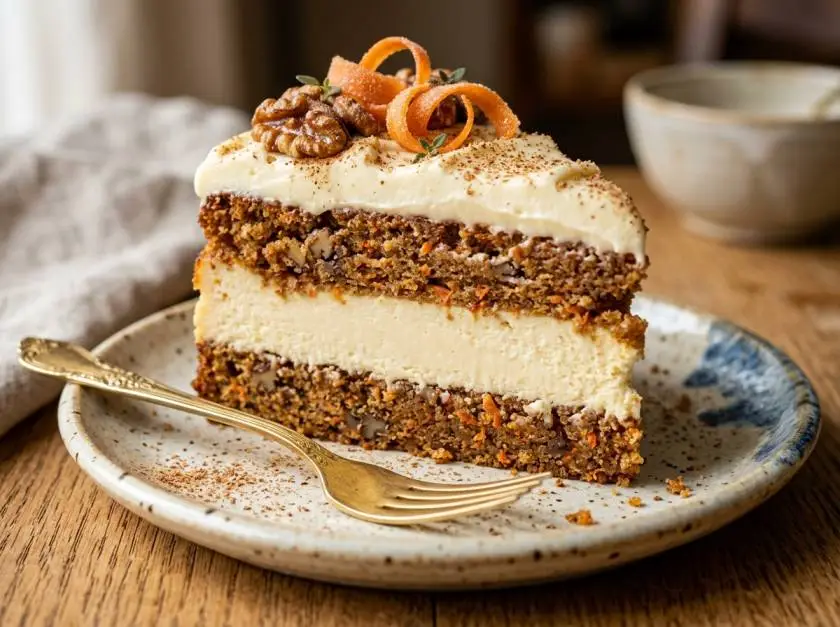
Carrot cake or cheesecake? For years, that question ended in a stalemate at dinner tables across Canada — until someone finally stopped choosing and started layering. Carrot cake cheesecake takes the warm, spiced comfort of carrot cake and marries it to the dense, tangy richness of New York-style cheesecake, usually finished with a swoop of cream cheese frosting. It’s not a gimmick. Done properly, it’s one of the most well-balanced desserts you can put on a Thanksgiving or Easter table, and it’s become a regular request at bakeries from Vancouver to Halifax.
As a pastry chef, I get asked about this dessert constantly — is it actually good, can you make it without an oven, does the frosting really belong on top, and what happened to the version restaurants used to serve. This guide answers all of it, then walks you through building your own from scratch.
Key Takeaways
- Carrot cake cheesecake works because the tartness of the cheesecake layer cuts the sweetness of the spiced cake — they balance each other rather than compete.
- It’s not automatically “healthier” or “unhealthier” than a standard slice of either dessert; portion size and frosting quantity matter more than which dessert it started as.
- A no-bake version is absolutely possible, but it changes the texture of the cheesecake layer, and there are a few mistakes that ruin it every time.
- Cream cheese frosting isn’t optional — it’s the ingredient that ties both layers together, both structurally and in flavour.
- Full recipe and troubleshooting FAQ are below, sized for a standard 9-inch springform pan.
Is Carrot Cake Cheesecake Actually Good?
Short answer: when it’s made correctly, yes — noticeably better than either dessert on its own. The reason comes down to contrast. Carrot cake leans sweet and spiced, with cinnamon, nutmeg, and often crushed pineapple or shredded coconut adding moisture. Cheesecake, on the other hand, is tangy and dense from cream cheese and sour cream. Stacked together, the cheesecake layer stops the cake from tasting one-note sweet, and the cake keeps the cheesecake from feeling heavy. That balance is exactly why the combination has staying power rather than being a passing trend.
You’ll sometimes see carrot cake nicknamed “divorce cake” online. The name isn’t about the dessert itself — it’s an internet joke referencing an old news story where a couple’s divorce settlement famously came down to fighting over a carrot cake recipe. It has nothing to do with the cake’s ingredients or quality; it’s just a name that stuck.
As for which is “healthier,” neither carrot cake nor cheesecake earns that label in a meaningful sense. Carrot cake often carries a health halo because of the vegetable in its name, but a slice can carry as much sugar and fat as cheesecake once you account for oil, sugar, and cream cheese frosting. If you’re comparing the two, look at portion size and frosting thickness before you look at which one has carrots in it.
Can You Make a No-Bake Version?
Yes, and for home bakers without a lot of oven space — or in the middle of a Canadian summer when you don’t want to run the oven — this is often the better route. A no-bake cheesecake layer relies on gelatin or a high ratio of whipped cream and cream cheese to set, rather than eggs and heat. The carrot cake layer, however, still needs to be baked separately; there’s no way around that, since raw cake batter won’t set without heat.
The texture difference is real: a baked cheesecake layer is denser and slightly firmer, while a no-bake layer is lighter and mousse-like. Neither is “better” — it’s a matter of preference. The most common mistakes I see with no-bake versions are under-chilling (give it a minimum of six hours, ideally overnight) and using low-fat cream cheese, which won’t set properly. Stick to full-fat, block-style cream cheese, not the spreadable tub kind, and you’ll avoid the runny-middle problem that trips up most first attempts.
Does Cream Cheese Frosting Belong on Carrot Cake?
Unambiguously yes — it’s traditional, not optional. Carrot cake’s spice profile needs the tang of cream cheese frosting to cut through the sweetness; a plain buttercream leaves the cake tasting flat. The secret to getting it right is temperature and ratio: your cream cheese and butter both need to be properly softened (not melted) before creaming, and you want roughly equal parts cream cheese to butter so the frosting holds its shape without weeping. The most common carrot cake mistake isn’t the cake at all — it’s frosting a cake that hasn’t fully cooled, which melts the frosting into the crumb instead of sitting on top of it.
What About the Restaurant Version?
If you’ve had carrot cake cheesecake at a chain restaurant, availability tends to shift by season and location rather than disappearing outright — dessert menus rotate more often than people expect, and a favourite can vanish from one location while still running at another. If you’re chasing a specific restaurant version, your best bet is calling ahead or checking the current menu directly, since these things change throughout the year. The good news is that a homemade version, done well, holds up against any restaurant plate.
The Recipe: Swirled Carrot Cake Cheesecake with Pineapple, Coconut & Walnuts
This is the version I actually recommend to home bakers who want something closer to a true swirl than a stacked layer cake — the cheesecake batter is dropped straight into the carrot cake batter and marbled together in one pan, then finished with a pineapple-spiked cream cheese frosting. Makes one 9-inch (23 cm) springform cake, 12–14 slices.
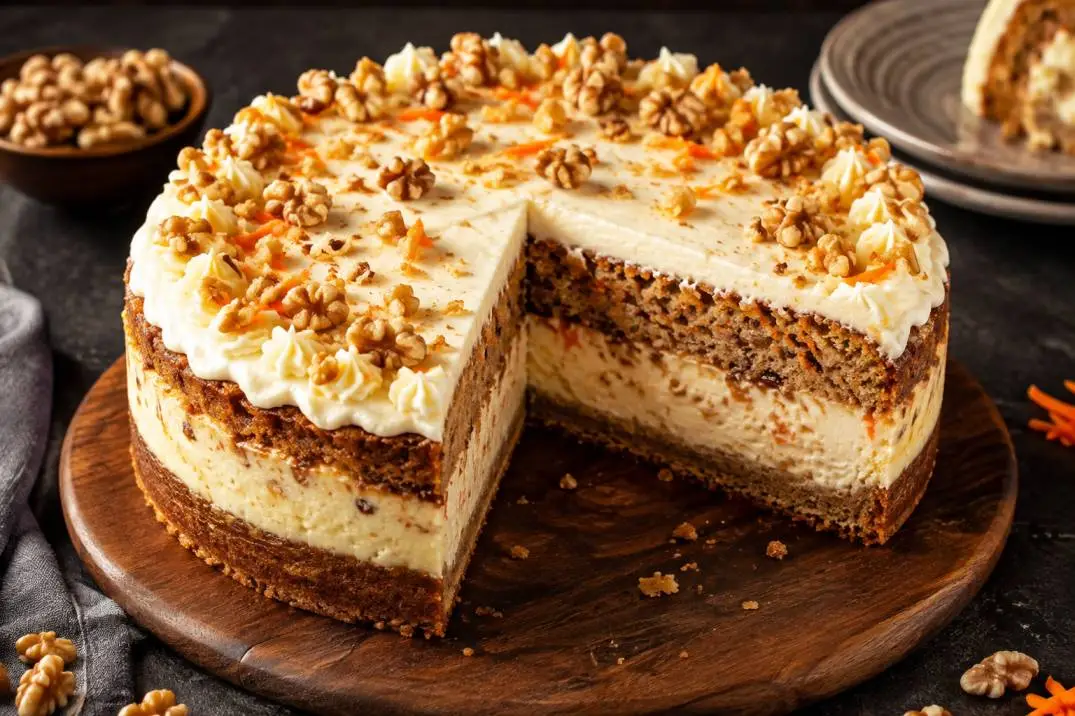
Carrot Cake Cheesecake
Ingredients
Equipment
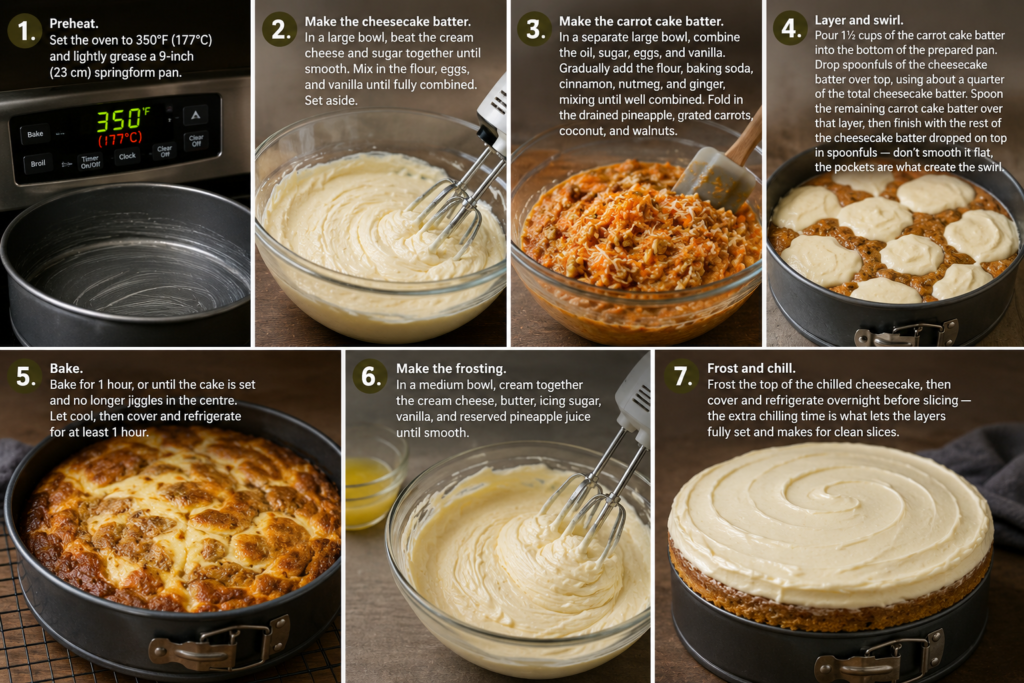
- Preheat. Set the oven to 350°F (177°C) and lightly grease a 9-inch (23 cm) springform pan.
- Make the cheesecake batter. In a large bowl, beat the cream cheese and sugar together until smooth. Mix in the flour, eggs, and vanilla until fully combined. Set aside.
- Make the carrot cake batter. In a separate large bowl, combine the oil, sugar, eggs, and vanilla. Gradually add the flour, baking soda, cinnamon, nutmeg, and ginger, mixing until well combined. Fold in the drained pineapple, grated carrots, coconut, and walnuts.
- Layer and swirl. Pour 1½ cups of the carrot cake batter into the bottom of the prepared pan. Drop spoonfuls of the cheesecake batter over top, using about a quarter of the total cheesecake batter. Spoon the remaining carrot cake batter over that layer, then finish with the rest of the cheesecake batter dropped on top in spoonfuls — don’t smooth it flat, the pockets are what create the swirl.
- Bake. Bake for 1 hour, or until the cake is set and no longer jiggles in the centre. Let cool, then cover and refrigerate for at least 1 hour.
- Make the frosting. In a medium bowl, cream together the cream cheese, butter, icing sugar, vanilla, and reserved pineapple juice until smooth.
- Frost and chill. Frost the top of the chilled cheesecake, then cover and refrigerate overnight before slicing — the extra chilling time is what lets the layers fully set and makes for clean slices.
Frequently Asked Questions
Is carrot cake cheesecake good?
Yes — the tangy cheesecake layer balances the sweet, spiced cake, which is why the combination works better than either dessert alone.
Why is it called “divorce carrot cake”?
It’s an internet nickname tied to a viral story about a couple’s divorce settlement involving a carrot cake recipe — it has no bearing on the recipe itself.
Which is healthier, cheesecake or carrot cake?
Neither has a clear edge. Both rely heavily on sugar, fat, and eggs; portion size affects the nutritional impact more than which dessert you choose.
Can I make a no-bake carrot cake cheesecake?
Yes, for the cheesecake layer — use full-fat block cream cheese and gelatin or whipped cream to set it, then pair it with a separately baked cake layer, since the cake portion can’t be made without an oven.
What are common no-bake cheesecake mistakes?
Using low-fat cream cheese and not chilling long enough are the two biggest culprits behind a cheesecake layer that won’t set.
Does cream cheese frosting go on carrot cake?
Yes — it’s the traditional pairing, and the tang is essential to balancing the cake’s sweetness and spice.
What’s a common carrot cake mistake?
Frosting the cake before it’s fully cooled, which melts the frosting into the crumb instead of letting it sit on top.
Final Thoughts
Carrot cake cheesecake isn’t a novelty mashup — it’s a genuinely well-engineered dessert once you understand why the pairing works: contrast in texture, contrast in flavour, and a frosting that ties both halves together. Whether you go the classic baked route above or a lighter no-bake cheesecake layer for a warm-weather bake, the technique matters more than the shortcut you choose.
Try the recipe this weekend, and if you run into a cracked cheesecake layer or a cake that won’t release from the pan, drop a comment — I’ll help you troubleshoot it before your next attempt.