
Chocolate cheesecake sounds like it should be easy — cheesecake, plus chocolate, done. In practice, a lot of home versions come out with a faint cocoa hint instead of the deep, rich chocolate flavour you’d expect from something with “chocolate” in the name. The gap between those two results almost always comes down to which form of chocolate you use and how much of it, not some more complicated technique.
As a pastry chef, that’s genuinely the question I hear most about this chocolate cheesecake recipe — what chocolate actually works best, whether it’s a legitimate flavour or just chocolate mixed into a plain recipe as an afterthought, and how far you can strip the ingredient list down if you want a quick no-bake version. This guide covers all of it, then gives you a full recipe.
Key Takeaways
- Melted chocolate, not just cocoa powder, is what gives chocolate cheesecake its depth — cocoa powder alone tends to produce a milder, less rounded flavour.
- Chocolate cheesecake is a well-established, genuine dessert category, not a novelty variation on plain cheesecake.
- A true 3-ingredient no-bake chocolate cheesecake is achievable — cream cheese, melted chocolate, and whipped cream, folded together and chilled.
- Cheesecake’s reputation as unhealthy or difficult applies about equally across flavours; chocolate isn’t a meaningful outlier in either direction.
- Full recipe and an FAQ built from real reader questions are below.
What’s the Best Chocolate to Use in Cheesecake?
The single biggest factor in getting real chocolate flavour is using melted chocolate directly in the batter, not relying on cocoa powder alone. Cocoa powder brings chocolate notes, but it’s a fraction of what real melted chocolate delivers in terms of richness and mouthfeel, since it’s missing the cocoa butter that gives chocolate its body. A good approach is combining both — melted semi-sweet or dark chocolate folded into the batter for depth, with a small amount of cocoa powder added alongside to reinforce the flavour without thinning the texture.
As for which chocolate specifically, semi-sweet or bittersweet (around 55–65% cocoa) tends to work best in cheesecake — it’s rich enough to stand up to the tang of cream cheese without making the filling overly sweet the way milk chocolate can. Melting semi-sweet chocolate chips directly into the batter, as in the chocolate chip cheesecake recipe below, is a particularly convenient way to get that same rich flavour without needing a chopped chocolate bar. If you want to make an already-good chocolate cheesecake even better, a thin layer of ganache on top, or a swirl of caramel or peanut butter through the filling, are the additions that tend to elevate it the most without overcomplicating the recipe.
Is Chocolate Cheesecake Actually a Legitimate Dessert?
Yes, unquestionably — it’s one of the most common chocolate cheesecake flavours, not a novelty spinoff. Done well, it tastes like a genuine cross between a dense chocolate torte and traditional cheesecake tang, rather than plain cheesecake with a chocolate note tacked on. Whether it’s the “tastiest” cheesecake flavour overall really comes down to personal preference — it competes for that title against classics like New York plain, strawberry, and caramel, without a clear universal winner.
It’s also worth noting that when people search for a Cheesecake Factory chocolate cake specifically, they’re often thinking of two different things — the Godiva Chocolate Cheesecake, which layers flourless chocolate cake with chocolate cheesecake and ganache, and Linda’s Fudge Cake, a standalone six-layer chocolate cake with no cheesecake in it at all. Knowing which one you’re after matters if you’re trying to recreate a specific dessert at home rather than a chocolate cheesecake in general.
As for the health comparisons — chocolate cheesecake isn’t meaningfully more or less unhealthy than other rich cheesecake flavours or other dense chocolate cakes. Rich baked desserts in general carry similar calorie density per slice; chocolate as an ingredient doesn’t push it into a different category than a caramel or brownie-based dessert would.
What Makes Cheesecake Difficult, Chocolate or Otherwise?
Cheesecake’s reputation as a challenging dessert comes down to its custard-like structure having very little tolerance for error compared to cake batter — overmixing, incorrect bake time, or cooling too fast all show up as visible cracks or texture problems far more readily than they would in a typical cake. Chocolate cheesecake doesn’t add much extra difficulty on top of that baseline, aside from making sure melted chocolate is properly cooled before it’s folded into the batter — adding it too warm can cause the cream cheese to soften unevenly and affect how smoothly everything blends.
Can You Really Make a 3-Ingredient No-Bake Chocolate Cheesecake?
Yes, and it’s a genuine shortcut rather than a lesser version. A basic filling comes down to cream cheese, melted chocolate, and whipped cream, folded together and chilled until set — no eggs, no oven, no water bath. A 4-ingredient version usually just adds a bit of sugar or vanilla back in for a rounder flavour. These no-bake versions trade the dense, baked texture for something lighter and mousse-like, which works well for a quick dessert, though it won’t replicate the deep, set structure of a properly baked chocolate cheesecake.
The Recipe: Chocolate Chip Cheesecake with Oreo Crust
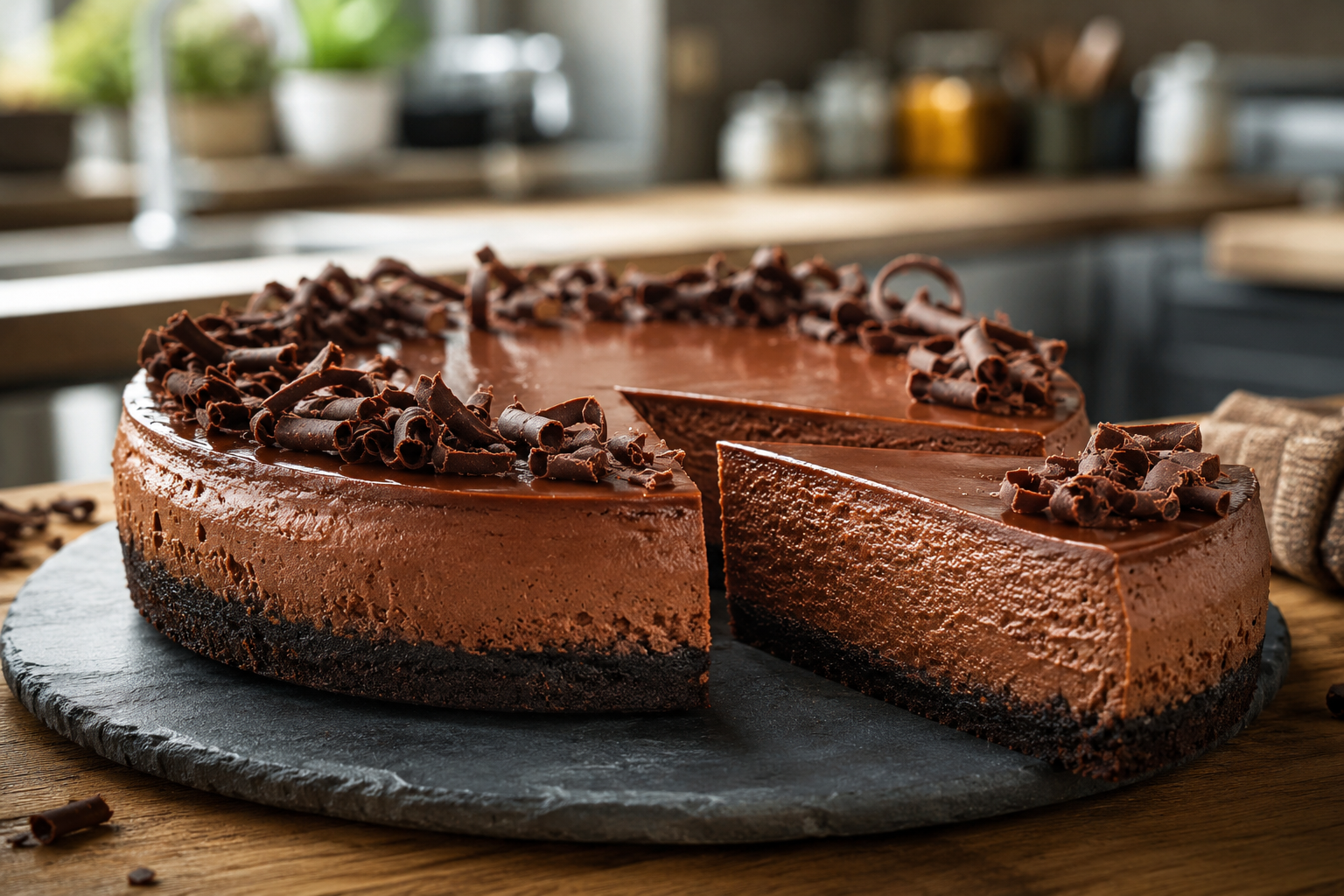
Chocolate Cheesecake
Ingredients
Method
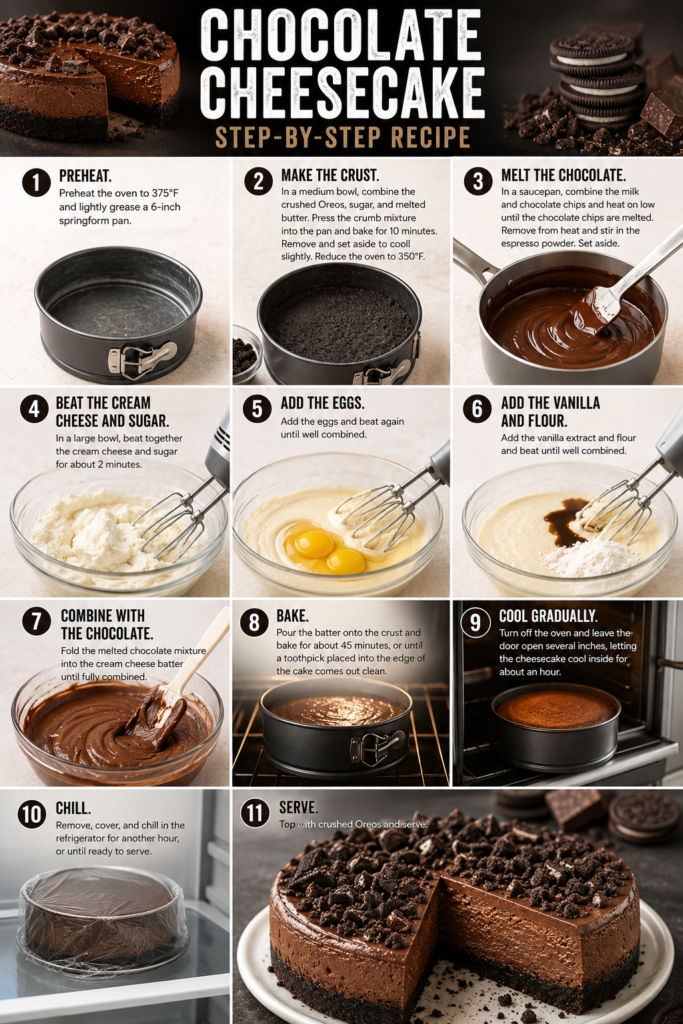
- Preheat. Preheat the oven to 375°F and lightly grease a 6-inch springform pan.
- Make the crust. In a medium bowl, combine the crushed Oreos, sugar, and melted butter. Press the crumb mixture into the pan and bake for 10 minutes. Remove and set aside to cool slightly. Reduce the oven to 350°F.
- Melt the chocolate. In a saucepan, combine the milk and chocolate chips and heat on low until the chocolate chips are melted. Remove from heat and stir in the espresso powder. Set aside.
- Beat the cream cheese and sugar. In a large bowl, beat together the cream cheese and sugar for about 2 minutes.
- Add the eggs. Add the eggs and beat again until well combined.
- Add the vanilla and flour. Add the vanilla extract and flour and beat until well combined.
- Combine with the chocolate. Fold the melted chocolate mixture into the cream cheese batter until fully combined.
- Bake. Pour the batter onto the crust and bake for about 45 minutes, or until a toothpick placed into the edge of the cake comes out clean.
- Cool gradually. Turn off the oven and leave the door open several inches, letting the cheesecake cool inside for about an hour.
- Chill. Remove, cover, and chill in the refrigerator for another hour, or until ready to serve.
- Serve. Top with crushed Oreos and serve.
Method
Frequently Asked Questions
What is the best chocolate for cheesecake?
Melted semi-sweet or bittersweet chocolate (around 55–65% cocoa), often combined with a small amount of cocoa powder, gives the richest, most balanced flavour.
How do you add chocolate into a cheesecake?
Fold cooled melted chocolate directly into the batter along with a bit of cocoa powder, rather than relying on cocoa powder alone.
What can I add to cheesecake to make it better?
A ganache topping, or a swirl of caramel or peanut butter through the filling, are reliable ways to elevate an already good chocolate cheesecake.
Is chocolate cheesecake good?
Yes — it’s a well-established, popular flavour, not a novelty variation, though whether it’s the single “best” flavour comes down to personal preference.
Is cheesecake more unhealthy than cake?
Not meaningfully — both are calorie-dense per slice, and chocolate cheesecake doesn’t stand out as worse than a comparable chocolate cake or torte.
How do I make a cheesecake with only 3 ingredients?
Cream cheese, melted chocolate, and whipped cream, folded together and chilled — a no-bake version with a lighter, mousse-like texture.
How do I make no-bake chocolate cheesecake?
Combine cream cheese and melted chocolate, fold in whipped cream, then chill for several hours until set — no oven required.
Final Thoughts
Chocolate cheesecake earns real depth when you lean on melted chocolate rather than cocoa powder alone — that single choice does more for the final flavour than any other adjustment. Whether you go with the full baked version above or a quick no-bake shortcut, the same principle holds either way.
Give the recipe a try this week, and if your chocolate flavour comes out fainter than expected, leave a comment — it’s almost always solved with a bit more melted chocolate, and I’m happy to help you dial it in.