
Cranberry cheesecake earns its spot on holiday tables for good reason — its tart, slightly sharp flavour cuts through cream cheese’s richness the way few other toppings can, and the deep red colour makes it an easy showstopper without much extra effort. If you are looking to bake a standout dessert, mastering a classic cranberry cheesecake comes down to understanding the core fundamentals that make or break any recipe. What’s interesting is that most of what people actually want to know about this dessert isn’t cranberry-specific at all — it’s the same handful of techniques that guarantee a flawless texture every time.
As a pastry chef, that’s genuinely the pattern I see — questions about getting a light, fluffy texture, avoiding common mistakes, and whether a stripped-down, minimal-ingredient version can actually deliver real cheesecake flavour. This guide covers all of it, then gives you a full cranberry cheesecake recipe.
Key Takeaways
- Cranberry’s natural tartness is a genuine asset in cheesecake, balancing richness the same way lemon or raspberry does, but with a sharper, more distinct bite.
- A genuinely minimal-ingredient cheesecake is achievable, but it typically means going no-bake rather than trying to strip down a baked recipe too far.
- Getting a light, fluffy texture comes down to ingredient temperature and mixing technique, not a special ingredient.
- Nearly every cheesecake mistake traces back to one of three things: overmixing, incorrect bake time, or cooling too quickly.
- Full recipe and an FAQ built from real reader questions are below.
How Do You Make Cranberry Cheesecake?
The most common approach is a cooked cranberry sauce or compote swirled through a classic baked cheesecake filling, or spooned on top as a distinct layer after baking. Fresh or frozen cranberries are quite tart and firm on their own, so simmering them down with sugar first — rather than adding them raw — softens the fruit and mellows the tartness just enough to complement the filling instead of overwhelming it. This is the same principle behind raspberry or strawberry cheesecake toppings: cook the fruit down first, then swirl or layer, rather than folding whole raw berries directly into the batter.
If you’re making this completely from scratch for the first time, the sequence that matters most is building the crust first, then the filling, then the cranberry component last, since the cranberry sauce needs time to cool before it goes anywhere near the batter — adding it warm can cause streaking or an uneven bake.
What’s the Secret to a Light, Fluffy Cheesecake?
This comes down to two things, not a hidden ingredient: ingredient temperature and how much you mix once the eggs go in. Room-temperature cream cheese, eggs, and sour cream blend smoothly and incorporate air evenly, which gives you a lighter texture than cold ingredients ever will, no matter how long you beat them. Once the eggs are added, though, mixing needs to slow down — overbeating at that stage traps excess air that expands in the oven and then collapses as the cheesecake cools, which paradoxically makes the final texture denser and more prone to cracking, not fluffier.
If you genuinely want an airier result rather than the dense New York style, folding in a small amount of whipped cream or beaten egg whites after the base batter is mixed gives you a real lift without changing the core recipe. That’s a deliberate technique choice, though, not a fix for a recipe gone wrong — a dense, rich cheesecake isn’t a mistake, just a different style than a light one.
Can You Really Make a 3-Ingredient Cheesecake?
Yes, and like most of the minimal-ingredient cheesecakes people ask about, the honest answer is that it usually means going no-bake rather than a stripped-down baked version. A basic 3-ingredient filling — cream cheese, sugar, and whipped cream — sets in the fridge without eggs or an oven at all, giving you real cheesecake flavour with minimal effort, though a lighter, less dense texture than a baked version. A 2-ingredient version typically drops even further, to just cream cheese and a sweetened condensed product like condensed milk, which sets on its own without whipping. These are genuinely useful shortcuts, not compromises, as long as you go in expecting a different texture than a classic baked cheesecake.
What Are the Most Common Cheesecake Mistakes?
Nearly every cheesecake problem comes down to one of three repeat offenders:
- Overmixing after the eggs go in. This traps extra air that expands in the oven and collapses on cooling — the leading cause of cracks.
- Getting the bake time wrong. Cheesecake should still have a gentle jiggle in the centre when it comes out of the oven; it firms up as it cools. Baking until it looks fully set in the oven usually means it’s already overdone.
- Cooling too fast. Pulling a hot cheesecake straight into a cold fridge or a drafty kitchen is what causes most late cracks, even in cheesecakes that baked perfectly. A slow cooldown in the oven with the door cracked open solves this almost every time.
As for what makes cheesecake one of the more technically demanding desserts overall — it’s not complexity so much as sensitivity. Cheesecake’s custard-like structure has very little tolerance for the small mistakes that a typical cake batter would easily absorb, which is why it has a reputation for being harder than its actual ingredient list would suggest.
The Recipe: Baked Cranberry Cheesecake with Strained Cranberry Topping
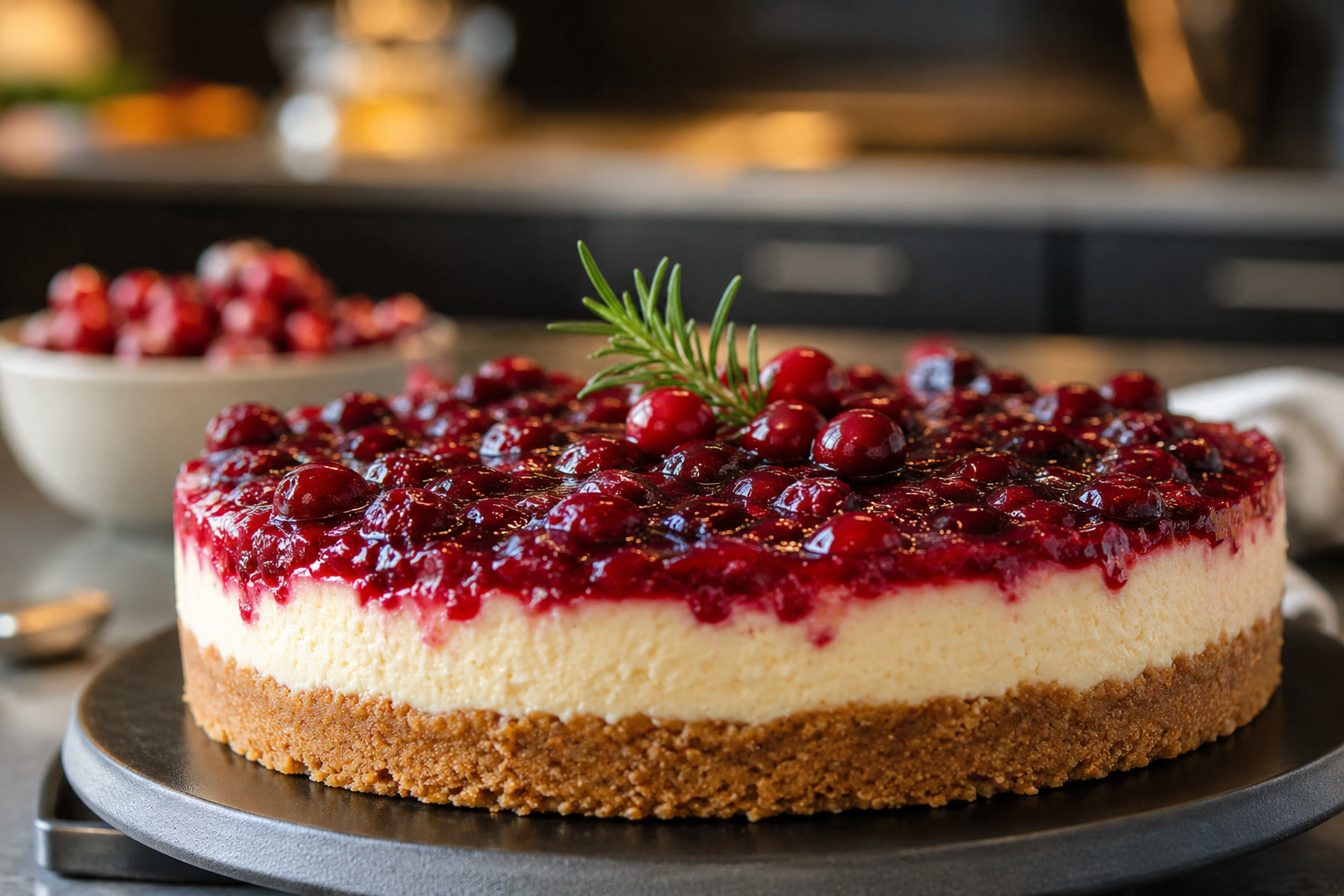
Cranberry Cheesecake
Ingredients
Method
- Preheat. Set the oven to 325°F (163°C).
- Prepare the pan. Wrap the outside of a greased 9-inch springform pan with a double layer of heavy-duty foil (about 18-inch square), pressing it carefully around the pan. Set on a baking sheet.
- Make the crust. Combine the melted butter and crumbs in a small bowl, then press into the bottom of the prepared pan. Bake for 6 minutes, then cool on a wire rack.
- Make the cranberry topping. While the crust bakes, combine the cranberries, sugar, and water in a large saucepan. Cook uncovered over medium heat for 12–15 minutes, until the berries pop. Stir in the lemon juice, then pass the mixture through a food mill into a small bowl to remove the pulp and seeds. Set aside.
- Make the filling. In a large bowl, beat the cream cheese, sugar, and lemon juice until no lumps remain. Add the eggs and beat on low speed just until incorporated.
- Fill and swirl. Pour the filling into the crust. Spread 60 mL (¼ cup) of the cranberry topping over the filling, then cut through with a knife to swirl. Reserve the rest of the topping for later.
- Bake in a water bath. Set the springform pan into a larger pan and pour in about 1 inch (2.5 cm) of hot water. Bake for 55–65 minutes, until the centre is firm and the top looks dull rather than glossy.
- Cool. Remove the springform pan from the water bath and take off the foil. Let the cheesecake cool on a wire rack for 10 minutes, then run a knife carefully around the edge of the pan to loosen it. Let cool for 1 hour more.
- Top and chill. Spread the remaining cranberry topping over the cheesecake. Once completely cooled, cover and refrigerate overnight.
- Serve. Remove the rim of the pan before slicing.
Notes

Why This Cranberry Cheesecake Works Every Time
Unlike denser styles that can feel heavy after a heavy meal, a well-made cranberry cheesecake strikes the perfect balance between velvety cream cheese and bright fruit acidity. When you combine the slow-cooling water bath method with a bright, homemade fruit compote, your cranberry cheesecake transforms from a standard holiday dessert into an absolute masterpiece that your guests will talk about all year.
Frequently Asked Questions
What is a quick and easy cheesecake recipe?
A no-bake version using cream cheese, sugar, and whipped cream, chilled until set, is the fastest route to real cheesecake flavour without an oven.
How do you make cheesecake with 2 ingredients?
Cream cheese and sweetened condensed milk, blended together and chilled, is the most common minimal version.
How can I make homemade cheesecake from scratch?
Build a graham crust, beat a cream cheese-based filling with minimal mixing once the eggs are added, and bake gently in a water bath before chilling overnight.
What is the secret to making good cheesecake?
Room-temperature ingredients and minimal mixing once the eggs are added — most texture problems trace back to one of those two things.
How do you make cheesecake light and fluffy?
Use room-temperature ingredients for smooth blending, and fold in whipped cream or beaten egg whites if you want extra lift beyond a standard dense filling.
What are common cheesecake mistakes to avoid?
Overmixing after the eggs go in, getting the bake time wrong, and cooling the cheesecake too quickly after it comes out of the oven.
What’s the hardest cheesecake to make?
There’s no single hardest recipe — cheesecake in general is technically demanding because its custard-like structure has little tolerance for small mixing or baking errors.
Final Thoughts
Cranberry cheesecake doesn’t need any special technique beyond what makes any great cheesecake work — the tart cranberry swirl is really just a seasonal flavour choice layered onto the same fundamentals of temperature, gentle mixing, and patient cooling. Get those right, and the cranberry does the rest of the work for you.
Give the recipe a try this week, and if your centre cracks or the swirl disappears into the batter, leave a comment — I’ll help you figure out exactly where it went off track.