Pumpkin cheesecake shows up everywhere once fall hits New York — bakery windows, holiday tables, even the big-box warehouse clubs stock a version big enough to feed a whole gathering. But there’s a meaningful gap between a decent pumpkin cheesecake and a genuinely great one, and it usually comes down to a handful of specific choices: how much pumpkin puree to use, whether to bake or skip the oven entirely, and getting the texture creamy instead of either soupy or cakey.
As a pastry chef, most of what I get asked about this dessert falls into two categories — the technical questions around actually baking one well, and the “which store-bought version is worth buying” questions that come up every fall. This guide covers both, then gives you a full recipe.
Key Takeaways
- Pumpkin puree adds moisture that plain cheesecake batter doesn’t have to account for, which is why pumpkin cheesecake recipes often use slightly less liquid elsewhere in the filling.
- A no-bake pumpkin cheesecake is a legitimate, faster alternative, though it produces a lighter, less dense result than a baked version.
- Costco’s Kirkland Signature pumpkin cheesecake is a genuinely well-regarded seasonal item, though recent reviews note the recipe has shifted slightly year to year.
- Sour cream generally edges out heavy cream as the better addition for pumpkin cheesecake specifically, since its tang balances pumpkin’s earthiness better than cream’s richness alone.
What Are the Most Common Problems When Making Pumpkin Cheesecake?
The biggest issue specific to pumpkin cheesecake is moisture management. Canned pumpkin puree brings noticeably more liquid into the batter than a plain cheesecake filling, and if that isn’t accounted for, the result can bake up looser or take longer to set than a standard recipe would suggest. The fix isn’t complicated — either use slightly less sour cream or heavy cream than a plain cheesecake recipe calls for, or briefly cook down the pumpkin puree on the stovetop to remove excess water before adding it to the batter.
Beyond that, the mistakes are the same ones that affect any baked cheesecake: overmixing after the eggs go in causes cracks, and overbaking dries out the centre instead of leaving the gentle jiggle you actually want. Underbaking is the safer direction to lean — the centre continues to set as it cools, so a cheesecake that still wobbles slightly when it comes out of the oven is exactly on target, not undercooked.
Is Costco’s Pumpkin Cheesecake Actually Good?
Costco’s Kirkland Signature Pumpkin Cheesecake has built a strong following as a fall staple, typically arriving in stores in September and running through Thanksgiving, and comes in at just under five pounds with a graham cracker crust, spiced pumpkin filling, and a whipped sour cream topping. It’s generally sized to serve 12 to 16 people and priced in the low-to-mid $20 range depending on the year and location. That said, reviews aren’t universally glowing — at least one detailed 2025 review noted the recipe had shifted, with a thicker whipped topping replacing what used to be a thinner cream cheese layer, and less overall filling relative to previous years. In short, it’s a genuinely well-regarded seasonal item, but it’s worth knowing the recipe has changed somewhat over time rather than assuming it’s identical year to year.
As for direct comparisons — Sam’s Club versus Costco, Costco versus The Cheesecake Factory, or whether Trader Joe’s carries something comparable — these come down to personal taste and what’s currently in stock at a given location more than a clear winner. Warehouse club bakery items in particular rotate seasonally, so the safest approach if you’re deciding between two specific products is to check current reviews and availability at your local store rather than relying on a general ranking, since recipes and lineups shift from year to year.
What’s the Best Way to Make Pumpkin Cheesecake?
Baked is the more traditional route and gives you the dense, rich texture most people associate with pumpkin cheesecake, especially around Thanksgiving. A no-bake version is a legitimate shortcut, particularly useful if oven space is limited during the holidays, but it produces a noticeably lighter, mousse-like result rather than the dense custard texture of a baked filling — worth knowing going in, since it’s a different eating experience, not just a faster version of the same one.
Between sour cream and heavy cream as an addition to the filling, sour cream is generally the better choice specifically for pumpkin cheesecake. Its tang cuts through pumpkin’s naturally earthy, slightly vegetal flavor in a way that heavy cream’s added richness doesn’t — heavy cream makes the filling smoother, but sour cream does more to balance the flavor profile.
What Makes Cheesecake in General So Technically Demanding?
Cheesecake’s reputation as one of the harder desserts to get right comes down to its custard-like structure having very little margin for error compared to cake batter — small mistakes in mixing, baking, or cooling show up far more visibly than they would in a typical cake. Pumpkin adds an extra variable on top of that baseline difficulty, since the puree’s moisture content needs to be accounted for in a way a plain vanilla filling doesn’t require. That combination is part of why pumpkin cheesecake specifically gets flagged as more finicky than some other flavored versions.
The Recipe: Large-Format Gingersnap Pumpkin Cheesecake
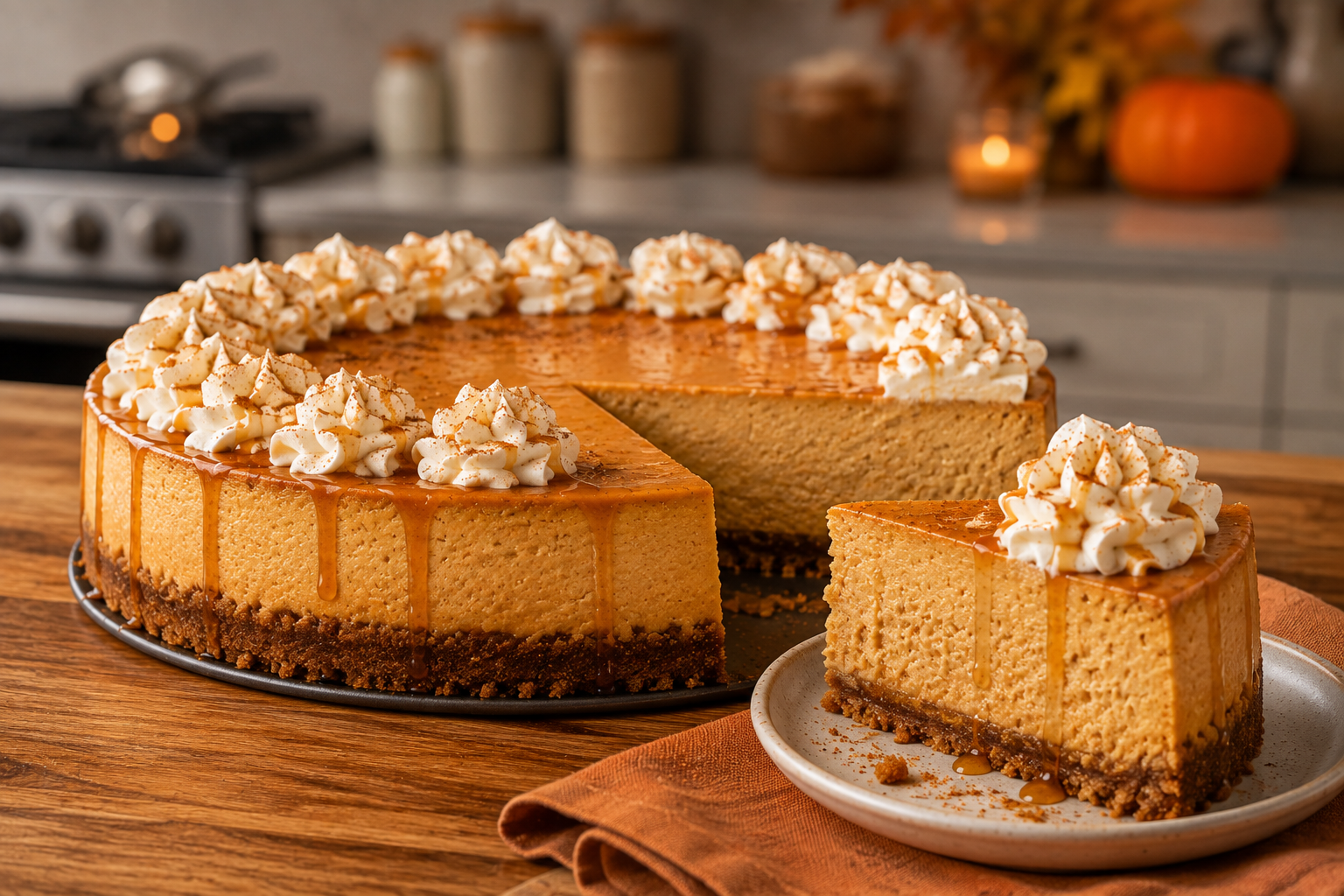
Pumpkin Cheesecake
Ingredients
Method
- Preheat and Prep: Preheat the oven to 350 degrees F. Grease a 13×9-inch baking dish.
- Make the Crust: In a small bowl, add gingersnap crumbs and butter and mix until a crumbly mixture forms. In the bottom of the prepared baking dish, place the mixture and press to smooth the surface. Set aside.
- Make the Filling: In a large bowl, add the cream cheese and sugar and with an electric mixer, beat until smooth. Add the pumpkin, cinnamon, and vanilla extract and beat until well combined. Add eggs and beat on low speed until just combined.
- Assemble: Place the pumpkin mixture over the crust evenly and sprinkle with nutmeg.
- Bake: Bake for about 40–45 minutes.
- Cool and Chill: Remove the pan from the oven and place onto a wire rack to cool for about 45–60 minutes. Now, refrigerate for at least 6 hours before serving.
- Serve: Drizzle with maple syrup and serve.
Notes
Nutrition Information (Per Serving)
- Calories: 308
- Total Fat: 24g
- Saturated Fat: 14.4g
- Protein: 6.5g
- Carbs: 18.3g
- Fiber: 0.9g
- Sugar: 12.9g
Frequently Asked Questions
- What is the secret to a good cheesecake? Room-temperature ingredients, minimal mixing once the eggs are added, and letting it cool gradually rather than rushing straight to the fridge.
- Is it better to overbake or underbake cheesecake? Underbake slightly — the centre continues to set as it cools, so a gentle jiggle when it comes out of the oven is exactly what you want.
- What are some tips for making pumpkin cheesecake? Account for the extra moisture pumpkin puree brings by using slightly less liquid or adjusting ingredients accordingly.
- What’s the best cream cheese for cheesecake? Full-fat, block-style cream cheese rather than the spreadable tub kind — it holds structure and sets properly, which the lower-fat or whipped versions don’t do as reliably.
- What is an easy no-bake pumpkin cheesecake recipe? Combine cream cheese, pumpkin puree, sugar, spices, and whipped cream, then chill until set — it skips the oven entirely but produces a lighter, less dense texture than a baked version.
- Is Costco’s pumpkin cheesecake good? Generally yes — it’s a well-regarded seasonal item, though the recipe has shifted somewhat in recent years according to detailed reviews, so it’s not identical every season.
- Which is better for cheesecake, heavy cream or sour cream? For pumpkin cheesecake specifically, sour cream tends to work better — its tang balances pumpkin’s earthy flavor more effectively than heavy cream’s added richness alone.
Final Thoughts
Pumpkin cheesecake rewards a bit of extra attention to moisture that a plain cheesecake doesn’t need — get that right, along with the same fundamentals that apply to any cheesecake, and you end up with the dense, spiced slice that makes it a fall favorite in the first place.
Give the recipe a try this week, and if your filling comes out too loose or takes longer to set than expected, leave a comment — it’s almost always the pumpkin’s moisture content, and I’m happy to help you troubleshoot.