

Every bakery seems to call its cheesecake “New York style” these days, whether or not it has much in common with the real thing. The name has become a catch-all for “rich and dense,” but true New York cheesecake has specific technical markers behind it — and knowing them is the difference between recognizing the real thing on a menu and just taking a label at face value.
As a pastry chef, the questions I hear most about this dessert are about what genuinely sets it apart — from regular cheesecake, from Philadelphia-style, and increasingly, from Basque-style, which has become its biggest rival in popularity over the last several years. This guide walks through all of it, plus where to actually find a great one if you’re not making your own.
Key Takeaways
- New York cheesecake is defined by density and richness — extra egg yolks, sometimes heavy cream, and a longer, gentler bake than other styles.
- It’s traditionally always baked; there’s no established “no-bake New York style,” since the density that defines it comes specifically from eggs and heat.
- Junior’s in Brooklyn is the most widely recognized name in New York cheesecake, operating since 1950 and repeatedly ranked among the best by major outlets.
- Basque cheesecake is a genuinely different style — crustless, intentionally over-browned, and looser in the centre — not simply a variation on New York style.
- Full recipe and an FAQ built from real reader questions are below.
What Actually Separates New York Cheesecake from Regular Cheesecake?
“Regular cheesecake” isn’t really a fixed category — it’s more of a baseline that New York style builds on. What distinguishes New York specifically is a higher ratio of egg yolks to whole eggs than many other recipes use, along with sour cream or heavy cream added for extra richness. The result is denser and more custard-like than a lighter, more general cheesecake recipe, with a smoother, richer mouthfeel rather than an airy one.
Is one objectively “better”? Not really — it comes down to preference for density versus lightness. What’s more settled is that New York style is traditionally always baked. Its defining richness comes specifically from eggs cooking slowly into a custard; there’s no well-established no-bake version that reproduces that same dense texture, since no-bake recipes rely on gelatin or whipped cream rather than egg-based structure.
What’s in a New York Cheesecake, and How Does It Compare to Philadelphia Style?
A true New York cheesecake filling comes down to cream cheese, sugar, eggs (with extra yolks), and typically sour cream or heavy cream, baked on a thin graham or cookie crust — often in a water bath for a smooth, crack-free top. “Philadelphia cheesecake,” by contrast, generally isn’t a distinct technique at all; it typically just refers to a recipe built around Philadelphia-brand cream cheese specifically, used as a mark of reliability rather than indicating a different method or texture. If you see both names on a menu or in a recipe title, the real technical distinction to look for is New York versus Chicago or Basque style — Philadelphia is a brand reference, not a competing technique.
As for the secret to a good cheesecake in general, it’s less about a special ingredient and more about care at three points: keeping ingredients at room temperature so they blend smoothly, avoiding overmixing once the eggs go in, and cooling the finished cheesecake gradually rather than rushing it straight into the fridge.
Where Can You Find the Most Famous New York Cheesecake?
Junior’s, based in Brooklyn since 1950, is the name most closely associated with authentic New York cheesecake, repeatedly called one of the best by outlets including The Wall Street Journal and New York Magazine, and known for a distinctive touch — a thin sponge cake base under the filling instead of a standard graham crust, along with a water-bath baking method that keeps the top smooth. If you’re looking to try or ship an example of the real thing rather than make one yourself, that’s the name most consistently pointed to.
As for celebrity bakery recommendations specifically — Taylor Swift’s reported favorite New York City bakeries are Milk Bar and Levain, both known primarily for cookies and layer cakes rather than cheesecake, so that particular association doesn’t translate into a specific cheesecake recommendation the way it might for a cookie or birthday cake.
New York vs. Basque Cheesecake: What’s Actually Different?
These two have become the biggest rivals in the cheesecake world over the past several years, and they genuinely are different desserts, not just variations on a theme. Basque cheesecake skips the crust entirely, bakes at a much higher temperature for a shorter time, and is intentionally left with a deeply browned, almost burnt-looking top and a looser, creamier centre — closer to a baked custard than New York’s fully set, dense structure. New York cheesecake, by comparison, is built for a clean, uniform slice with a pale top and firm-but-creamy interior throughout.
Neither is objectively “better” or healthier than the other in any meaningful way — both rely on similar core ingredients in similar proportions; the differences are structural and visual rather than nutritional. Basque cheesecake is sometimes called “burnt cheesecake” or referred to by its Spanish name, tarta de queso, both of which describe the same style.
The Recipe: Classic New York Cheesecake
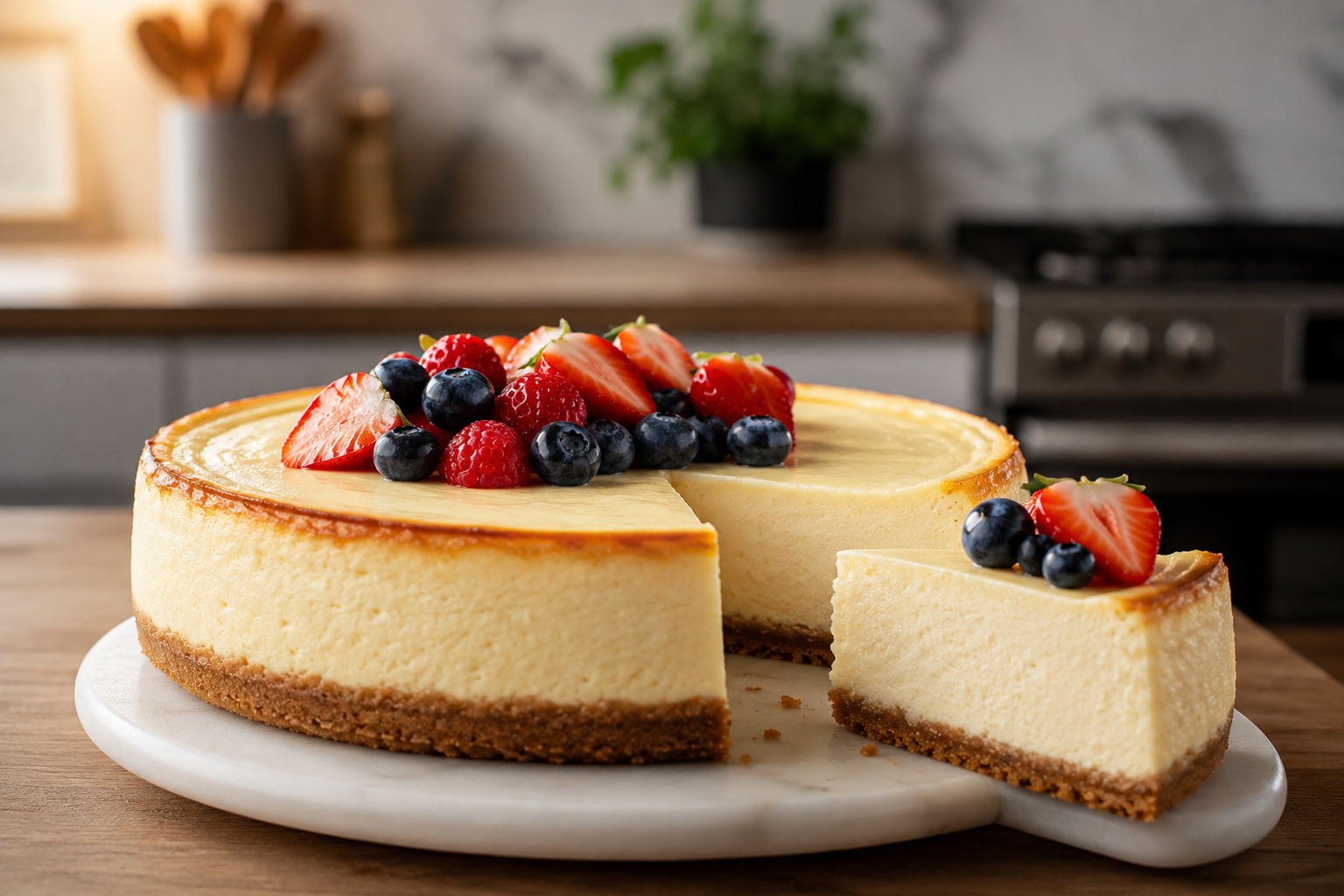
New York Cheesecake
Ingredients
Method
- Preheat oven to 350°F.
- In a medium bowl, combine graham cracker crumbs, sugar, and butter. Press into the bottom and up the sides of a greased 8 inch springform pan. Bake for 8 minutes, until golden.
- In a large mixing bowl, beat cream cheese until smooth. Add in sugar and vanilla and beat well. Add in eggs one at a time until just combined.
- Bake for 45 minutes, until lightly golden. Cool, cover and chill overnight.

Frequently Asked Questions
Is New York style cheesecake better?
Not objectively — it’s denser and richer than many other styles, which comes down to personal preference rather than one being superior.
Why is New York cheesecake special?
Its higher ratio of egg yolks and use of sour cream or heavy cream gives it a distinctly dense, custard-like texture compared to lighter cheesecake styles.
Is New York style cheesecake always baked?
Yes, traditionally — its defining density comes from eggs and heat, which no-bake methods don’t replicate.
What’s the difference between New York and Philadelphia cheesecake?
Philadelphia generally just refers to using that specific cream cheese brand, not a distinct baking technique — it’s not a competing regional style the way Chicago or Basque are.
What is the most famous cheesecake in NYC?
Junior’s, based in Brooklyn since 1950, is the name most consistently associated with authentic New York cheesecake.
Which is better, New York cheesecake or Basque cheesecake?
Neither is objectively better — they’re genuinely different styles, with New York being dense and uniform and Basque being looser, crustless, and intentionally browned.
What is another name for Basque cheesecake?
It’s often called “burnt cheesecake” or referred to by its Spanish name, tarta de queso.
Is Basque cheesecake healthier than regular cheesecake?
Not meaningfully — both use similar core ingredients in similar proportions; the differences are structural and visual, not nutritional.
Final Thoughts
New York cheesecake earns its reputation through specific, identifiable technique — extra yolks, added richness, and a long, gentle bake — not just a name on a menu. Whether you’re making your own, ordering from an institution like Junior’s, or comparing it against the rising popularity of Basque style, knowing what actually defines the style makes it easier to know what you’re getting.
Give the recipe a try this week, and if your texture comes out lighter or looser than you expected, leave a comment — it’s almost always the ingredient proportions, and I’m happy to help you adjust it.